

A complete trip to Ayodhya takes 2 to 3 days. Budget travelers spend about ₹4,500 to ₹8,000 per person. Mid-range family stays cost ₹9,500 to ₹16,500 per person, while comfort hotels and private cabs cost ₹18,000 to ₹30,000 or more per person. These estimates do not include long-distance flights or trains to Uttar Pradesh.
General darshan at Shri Ram Janmabhoomi Mandir is completely free. The best months to visit are October to March.
Key Takeaways
- Free Temple Entry: Entry to Shri Ram Janmabhoomi Mandir and all major temples in Ayodhya is free. Never pay agents who try to sell “VIP entry.”
- Strict Security Rules: Mobile phones, smartwatches, leather wallets, chargers, and bags are not allowed inside the Ram Mandir complex. Use the free official lockers outside.
- Best Time to Visit: October to March brings pleasant daytime weather (15°C to 26°C). It is ideal for walking along Ram Path and watching the evening Saryu Aarti.
- Easy Local Travel: Battery e-rickshaws and golf carts are the fastest way to travel through narrow temple lanes where private cars cannot enter.
- Great Twin-City Trips: Ayodhya is just 135 km from Lucknow (2.5–3 hours by road) and about 200 km from Varanasi (4–4.5 hours). You can easily combine them in one trip.
Introduction
Ayodhya sits on the banks of the holy Saryu River in Uttar Pradesh. Across India, people revere it as the birthplace of Lord Ram and one of Hinduism’s seven sacred cities (Sapta Puri).
With the opening of Shri Ram Janmabhoomi Mandir, upgraded railway stations, a new airport, and wide heritage roads like Ram Path and Bhakti Path, visiting Ayodhya is now much better organized. Still, heavy crowds and strict security checks can surprise unprepared visitors.
This guide gives you a clear plan for your Ayodhya trip. It covers top temples by area, main attractions, darshan pass rules, and a realistic budget in Indian Rupees.
Best Time to Visit Ayodhya
| Season | Weather & Temperatures | Crowd & Experience | Verdict |
| October – March (Winter & Spring) | Day: 16°C to 28°C; Night: 7°C to 14°C. Cool, dry, and easy for walking. | Moderate to High (Biggest crowds on Diwali, Vivah Panchami, and Ram Navami). | Best time to visit, especially with elders and children. |
| April – June (Summer) | Day: 36°C to 44°C; Very hot afternoons with strong sun on open stone paths. | Low to Moderate (Except Ram Navami week). | Skip afternoon outings; visit temples from 6:00 AM–10:00 AM and after 5:00 PM. |
| July – September (Monsoon) | Day: 28°C to 34°C; Humid air with sudden heavy rain. | Low (Except Sawan Jhula Mela in July/August). | Good for budget trips, though humid weather makes long lines tiring. |
Top Temples in Ayodhya (Grouped by Location)
Visiting temples area by area saves hours of traveling back and forth in traffic.
Cluster 1: Ram Path & Bhakti Path Core (Walking Distance)
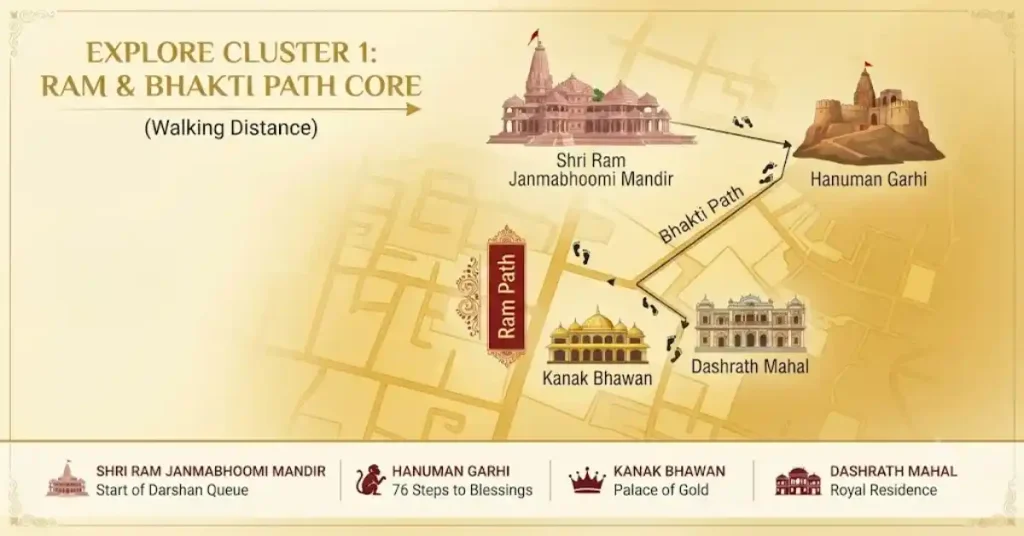
- Shri Ram Janmabhoomi Mandir: Builders crafted this grand three-storey temple in the traditional Nagara style using pink Bansi Paharpur sandstone, without any iron or steel. It houses the idol of Balak Ram (Ram Lalla). Expect a 45-minute to 2-hour wait in the general line on normal days, and 3–4 hours on weekends or Tuesdays.
- Hanuman Garhi: This temple sits on a hilltop mound with 76 steps, just 500 metres from Ram Janmabhoomi along Bhakti Path. According to tradition, pilgrims visit Lord Hanuman here first before going to Ram Mandir.
- Kanak Bhawan: A short walk from Hanuman Garhi, this palace-style temple is believed to be a wedding gift from Queen Kaikeyi to Goddess Sita. Inside, you will see ornate gold-crowned idols of Ram and Sita.
- Dashrath Mahal (Bada Asthan): Known as the traditional royal home of King Dashrath, this complex features colorful courtyard shrines, classical music during festivals, and peaceful morning aartis.
Cluster 2: Saryu Riverfront & Nearby Shrines
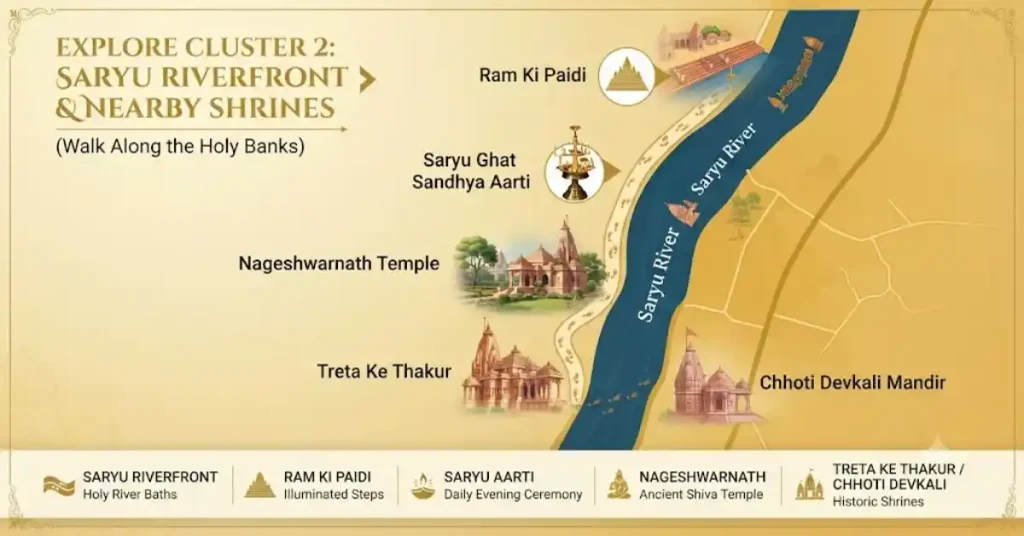
- Nageshwarnath Temple: Located near Ram Ki Paidi, this old Shiva temple is believed to have been built by Kush, the younger son of Lord Ram. Huge crowds gather here during Maha Shivaratri and Sawan.
- Treta Ke Thakur: Located near Naya Ghat, this historic temple marks the spot where Lord Ram is believed to have performed the Ashwamedha Yagna. (Note: Check local timings before going, as entry to the inner shrine stays closed on certain days outside major festivals.)
- Chhoti Devkali Mandir: Dedicated to Goddess Girija (Kuldevi of Goddess Sita), this temple is about 1.5 km from Naya Ghat.
Top Attractions in Ayodhya Beyond Temples
- Ram Ki Paidi: A row of stepped bathing ghats along a calm channel of the Saryu River near Naya Ghat. Clean, bright, and lively after sunset, it is the main place for holy dips and photos.
- Saryu Ghat Sandhya Aarti: Priests perform this evening prayer ceremony every day after sunset (usually between 6:30 PM and 7:30 PM, depending on the season) at Naya Ghat / Saryu Ghat. You can watch synchronized lamp rituals with bhajans and conch shells.
- Guptar Ghat: Located about 9–10 km away in Ayodhya Cantt, this quiet riverbank is revered as the place where Lord Ram took Jal Samadhi. It is much calmer than Naya Ghat and has neat gardens and riverside steps.
- Surya Kund (Darshan Nagar): About 4–5 km from the main temple town, this restored ancient water tank is dedicated to the Sun God. In the evening, it hosts a laser-and-sound show telling the story of the Ramayana. (Show timings and small ticket fees can change; check at the local counter.)
- Tulsi Smarak Bhawan & Museum: This cultural centre honours saint-poet Goswami Tulsidas, who wrote the Ramcharitmanas. It houses a library, a research centre, and daily evening Ramlila shows.
Ram Mandir Darshan Timings, Pass Booking & Security Rules
Darshan Timings & Passes
- General Darshan: Usually runs in two shifts—Morning (about 6:30 AM – 12:00 PM) and Afternoon/Evening (about 2:00 PM – 9:30 PM), with a midday break for Bhog and Shayan rituals. (Timings shift slightly in winter, summer, and on festival days; verify on the official Trust website before visiting.)
- How to Book Free Sugam Darshan or Aarti Passes:
- Go to the official Shri Ram Janmabhoomi Teerth Kshetra website (
srjbtkshetra.org). - Click Darshan / Aarti Booking and verify your mobile number with an OTP.
- Pick your date and time slot (Sugam Darshan, Mangala Aarti, Shringar Aarti, or Shayan Aarti). Enter your details and select a valid government photo ID (Voter ID, Passport, Driving Licence, or other accepted ID).
- Download the pass and bring the exact same original ID when you visit.
- Go to the official Shri Ram Janmabhoomi Teerth Kshetra website (
Mandatory Security & Locker Checklist
- Not Allowed Inside: Mobile phones, smartwatches, cameras, earphones, power banks, bags, backpacks, leather belts or wallets, and any sharp or metal items.
- Free Locker Facility: The Trust runs free, computerized Yatri Suvidha Kendra cloakrooms right outside the entry gate. Store your electronics and shoes there, take your token, and collect your items on the way out.
- Walking Inside: Even with a Sugam Darshan pass, you will walk about 1 to 1.5 km through security lanes. Wear slip-on shoes and cotton socks, as stone floors turn very cold in winter and very hot in summer.
Ayodhya Trip Budget Breakdown (2-Day / 2-Night Estimate)
Note: Hotel prices rise sharply during Ram Navami, Diwali, and long weekends. These numbers show realistic per-person costs in INR during normal months, excluding flights or long-distance trains to Ayodhya.
| Expense Category | Budget Traveler (Dorms / Dharamshalas & E-Rickshaws) | Mid-Range / Family (Standard 3-Star Hotels & Autos) | Comfort / Premium (Boutique Resorts & Private Cab) |
| Accommodation (2 Nights) | ₹1,400 – ₹2,600 (Dorms / Guest Houses) | ₹4,500 – ₹7,500 (Twin-sharing AC rooms) | ₹10,000 – ₹18,000+ (Premium hotels / resorts) |
| Local Sightseeing Transport | ₹400 – ₹700 (Shared E-rickshaws) | ₹1,200 – ₹2,000 (Reserved E-rickshaw / Auto) | ₹3,500 – ₹5,500 (Private AC sedan) |
| Food & Snacks (2 Days) | ₹800 – ₹1,200 (Local thalis & street food) | ₹1,500 – ₹2,500 (Family veg restaurants) | ₹3,000 – ₹4,500 (Hotel dining & cafes) |
| Darshan & Temple Entry | ₹0 (Free) | ₹0 (Free) | ₹0 (Free) |
| Prasad, Lockers & Extras | ₹400 – ₹700 | ₹800 – ₹1,200 | ₹1,500 – ₹2,000 |
| Estimated Total (Per Person) | ₹3,000 – ₹5,200 | ₹8,000 – ₹13,200 | ₹18,000 – ₹30,000+ |
Ideal 2-Day Ayodhya Itinerary
Day 1: Core Temples & Evening Saryu Aarti
- 6:30 AM: Start early at Hanuman Garhi before morning lines grow long.
- 8:00 AM: Walk to Shri Ram Janmabhoomi Mandir for darshan. Store your electronics in the free lockers outside.
- 10:30 AM: Eat a traditional breakfast (puri-sabzi, kachori, and jalebi) on Bhakti Path. Then visit Kanak Bhawan and Dashrath Mahal.
- 1:00 PM – 4:00 PM: Have lunch and rest at your hotel.
- 4:30 PM: Visit Nageshwarnath Temple and take a walk along Ram Ki Paidi.
- 6:30 PM: Watch the Saryu Sandhya Aarti at Naya Ghat, then enjoy dinner at a pure-vegetarian restaurant nearby.
Day 2: Quiet Ghats, Cultural Sites & Departure
- 7:30 AM: Drive to Guptar Ghat (Ayodhya Cantt) for a calm morning walk along the Saryu River and visit nearby shrines.
- 10:30 AM: Visit Tulsi Smarak Bhawan and browse Ram Path markets for wooden crafts and spiritual books.
- 1:30 PM: Have lunch and check out of your hotel.
- 4:30 PM: Visit Surya Kund in Darshan Nagar for the evening light-and-sound show before catching your night train or driving to Lucknow or Varanasi.
How to Reach Ayodhya & Local Transport Tips
- By Air: Maharishi Valmiki International Airport, Ayodhya (AYJ) has direct flights from Delhi, Mumbai, Bengaluru, Ahmedabad, and Kolkata. You can also fly to Lucknow Airport (LKO), which is 135 km away (2.5–3 hours via NH-27 / Purvanchal Expressway link).
- By Train: Ayodhya Dham Junction (AY) sits right in the temple town, about 1.5 km from Ram Mandir. Ayodhya Cantt (AYC) is 8 km away. Vande Bharat Express trains link Ayodhya directly to Delhi (Anand Vihar), Lucknow, and Varanasi.
- By Road: Wide four-lane highways connect Ayodhya to Lucknow (135 km), Prayagraj (165 km), Gorakhpur (135 km), and Varanasi (200 km).
- Getting Around Locally: Outstation private cars often stop at outer parking lots on busy days. Use battery e-rickshaws (₹10–₹30 per person for shared short rides, or ₹500–₹800 for a half-day private booking) to travel easily between temples.
READ ALSO:-Best Kedarnath Travel Guide 2027: Tour Plan, Budget & Itinerary
Frequently Asked Questions
1. How many days are enough to explore Ayodhya?
Two full days are enough to visit Shri Ram Janmabhoomi Mandir, Hanuman Garhi, Kanak Bhawan, Dashrath Mahal, Ram Ki Paidi, Saryu Aarti, Guptar Ghat, and Surya Kund without hurrying. Add 1 or 2 extra days if you want to visit Naimisharanya or Chitrakoot.
2. Is there any ticket fee for Ram Mandir darshan in Ayodhya?
No. Both general darshan and online Sugam Darshan / Aarti passes on the official Shri Ram Janmabhoomi Teerth Kshetra website are 100% free. Stay away from fake websites or local touts asking for money for “special tickets.”
3. Can we carry mobile phones and bags inside Ram Mandir?
No. Mobile phones, smartwatches, cameras, leather belts or wallets, and bags are not allowed inside the temple complex. Keep them in the free, guarded locker counters outside the entrance before entering the security line.
4. What is the dress code for visiting temples in Ayodhya?
There is no strict written dress code for general darshan, though modest traditional clothes—like kurta-pyjama, dhoti, saree, or salwar kameez—are best. Traditional Indian wear is required if you book an early-morning Mangala or Shringar Aarti pass. Avoid shorts, sleeveless tops, and torn jeans.
5. Which is the best area to book a hotel in Ayodhya?
First-time visitors and families with senior citizens should stay near Ram Path, Naya Ghat, or Civil Lines. This keeps main temples within a 10–15 minute e-rickshaw ride. Budget travelers can check UPSTDC tourist bungalows (like Saket Hotel) or trusted dharamshalas near Naya Ghat.
6. Is non-vegetarian food or alcohol available in Ayodhya?
No. The entire Panchkosi Parikrama area of Ayodhya is strictly vegetarian and alcohol-free. All hotels, dhabas, and restaurants serve pure vegetarian meals, and many also offer no-onion, no-garlic satvik food.
7. How can we combine Ayodhya with Varanasi and Prayagraj?
You can plan a 4-to-5-day Kashi–Prayag–Ayodhya spiritual trip. Start in Varanasi (2 days), drive to Prayagraj for Triveni Sangam (1 day, ~120 km), and finish in Ayodhya (2 days, ~165 km from Prayagraj) before flying out from Ayodhya or Lucknow.
8. Are wheelchairs available for senior citizens at Ram Mandir?
Yes. Free wheelchairs and battery golf carts for elderly or differently-abled visitors are available at the Yatri Suvidha Kendra near the Ram Janmabhoomi entrance on a first-come, first-served basis. Carry a valid government ID to register for a wheelchair