

The best winter destinations in India depend on the weather you want from November to February. For guaranteed snow and skiing, visit Gulmarg (Kashmir), Auli (Uttarakhand), or Manali (Himachal Pradesh). For warm beaches and calm seas, pick the Andaman Islands, Goa, or Kerala’s backwaters. If you want pleasant daytime sightseeing, royal forts, and local festivals, Rajasthan (Udaipur and Jaisalmer) and Gujarat’s Great Rann of Kutch offer great desert weather.
Key Takeaways
- Match the Place to Your Weather Goal: North India brings sub-zero snow. West and Central India offer crisp 15°C to 25°C days for sightseeing. South India stays warm and tropical.
- Go Higher for Reliable Snow: Lower hill stations like Shimla and Mussoorie do not get snow every December. For better snow chances, pick higher spots like Gulmarg, Auli, Solang Valley, or Tawang.
- Watch Out for Dec 20 – Jan 5 Price Jumps: Flight tickets and hotel rates rise fast during Christmas and New Year weeks. Travelling in November, early or mid-December, or February saves money.
- Book Safaris and Permits Early: Winter is busy for tiger reserves like Ranthambore and border areas like Tawang or the Rann of Kutch. Book permits and safaris 60 to 90 days ahead.
- Pack for Day-Night Cold in Deserts: Afternoons in Rajasthan and Kutch can feel warm in a cotton shirt. At night, temperatures can drop near 5°C. Bring a warm jacket for evening safaris and folk shows.
Introduction
Winter—roughly from November through February—is the most flexible travel season in India. The Himalayas turn into a snow-filled playground. At the same time, harsh summer heat and monsoon dampness fade from the plains, coasts, and deserts.
India has many different climate zones. So, choosing the right winter trip starts with picking the kind of break you want. Instead of mixing snow peaks and tropical beaches into one random list, this guide groups top winter places by travel style. You will also find realistic temperatures, trip lengths, and estimated costs per person in INR.
1. Best Snow & Himalayan Destinations (For Snowfall & Winter Sports)
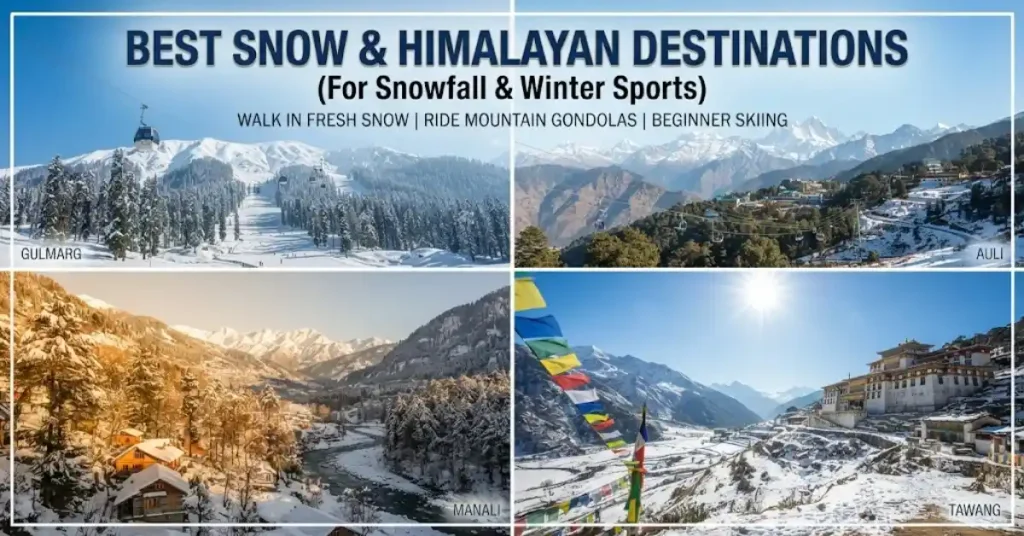
If you want to walk in fresh snow, ride a mountain gondola, or try beginner skiing, focus on high mountain towns above 8,000 feet.
Gulmarg, Jammu & Kashmir
- Best For: Skiing, snowboarding, couples, and serious snow lovers
- Winter Temperature: -8°C to 4°C
- Why Visit: Sitting at about 2,650 metres (8,690 ft) in the Pir Panjal range, Gulmarg is India’s top winter sports hub. Ride the Gulmarg Gondola (a cable car that carries passengers up mountain slopes) to Kongdoori and Apharwat Peak for wide views of snowy pine hills. You can also hire certified ski instructors on gentle beginner slopes. Pair 2 to 3 nights in Gulmarg with a shikara boat ride on Srinagar’s Dal Lake.
Auli, Uttarakhand
- Best For: Mountain views, skiing courses, and quieter mountain stays
- Winter Temperature: -4°C to 8°C
- Why Visit: Sitting around 2,800 metres in Chamoli district, Auli gives clear winter views of Nanda Devi, Kamet, and Mana Parvat. Unlike busy town centres, Auli mostly has ski slopes, oak forests, and mountain resorts. You can reach it by road or ropeway from Joshimath. January to early March brings the most reliable snow for skiing.
Manali & Solang Valley, Himachal Pradesh
- Best For: Families, friend groups, and easy snow activities
- Winter Temperature: -2°C to 10°C
- Why Visit: Manali stays a popular winter pick because overnight Volvo buses run directly from Delhi and Chandigarh. Manali town sees snow off and on. However, a short drive to Solang Valley or through the Atal Tunnel toward Sissu takes you into thick snow for tubing, snow biking, and photos. Stay in Old Manali or nearby villages like Sethan for a quieter trip.
Tawang, Arunachal Pradesh
- Best For: Offbeat mountain road trips, Buddhist monasteries, and high passes
- Winter Temperature: -6°C to 7°C
- Why Visit: At 10,000 feet in Northeast India, Tawang combines snow-covered passes like Sela Pass (13,700 ft) with the historic 17th-century Tawang Monastery. Keep in mind that Indian citizens must apply online for an Inner Line Permit (e-ILP) (an official travel pass for protected Indian states) before entering Arunachal Pradesh. Winter road trips also need extra buffer days in case snow slows down roads.
2. Best Warm Beaches & Tropical Escapes (For Sun & Calm Seas)

If freezing weather is not for you, India’s coasts and islands get sunny skies, low humidity, and gentle sea breezes from November to February.
Andaman & Nicobar Islands
- Best For: Scuba diving, snorkelling, clear blue water, and honeymoons
- Winter Temperature: 23°C to 30°C
- Why Visit: Winter brings calm seas and clear water visibility up to 20 to 30 metres near Swaraj Dweep (Havelock) and Shaheed Dweep (Neil Island). Spend mornings diving at Elephant Beach, watch sunset at Radhanagar Beach, and see the Cellular Jail light-and-sound show in Sri Vijaya Puram (Port Blair).
Goa (North & South)
- Best For: Beach shacks, nightlife, heritage walks, and long-weekend trips
- Winter Temperature: 21°C to 32°C
- Why Visit: Winter is Goa’s busiest and liveliest season. Go to North Goa (Anjuna, Vagator, Candolim) for flea markets, music festivals, and beach clubs. Pick South Goa (Palolem, Agonda, Cola) for quiet beaches, palm trees, and small boutique stays. Take an afternoon walk through the colourful Portuguese streets of Fontainhas in Panaji.
Kerala (Alleppey, Varkala & Kochi)
- Best For: Houseboat rides, Ayurvedic wellness, and relaxed coastal cliffs
- Winter Temperature: 22°C to 31°C
- Why Visit: Fresh greenery after the monsoon makes Kerala shine in winter. Ride along palm-lined canals on a traditional houseboat in Alleppey (Alappuzha). Walk along the red cliffs and yoga cafés of Varkala. You can also visit art galleries and spice markets in Fort Kochi.
3. Best Royal Deserts & Cultural Getaways (For Heritage & Festivals)

Hot summers make desert regions tiring. That makes winter the best time to explore western and northern India’s historic forts, temples, and culture.
Rajasthan (Udaipur, Jaisalmer & Jaipur)
- Best For: Palace stays, desert camping, street shopping, and family road trips
- Winter Temperature: 8°C to 24°C
- Why Visit: Clear blue skies and mild afternoons let you walk through big forts without heat tiredness. Take a boat ride on Lake Pichola in Udaipur. Watch golden sunsets on the Sam or Khuri sand dunes near Jaisalmer. Shop for cloth and block prints in Jaipur’s old markets.
Great Rann of Kutch, Gujarat
- Best For: White salt desert views, Kutchi crafts, and folk music
- Winter Temperature: 7°C to 25°C
- Why Visit: From November to February, monsoon water dries up and leaves behind a wide, bright white salt flat. The yearly Rann Utsav near Dhordo features tent stays, Rogan art and embroidery workshops, and night walks on the salt desert. Check official permit and tent booking details on the Gujarat Tourism website.
Varanasi, Uttar Pradesh
- Best For: Spiritual heritage, sunrise boat rides, and winter street food
- Winter Temperature: 8°C to 22°C
- Why Visit: Cool winter mornings bring a soft golden mist over the Ganga ghats. Take an early morning rowboat from Assi Ghat to Manikarnika Ghat. Watch the evening Ganga Aarti at Dashashwamedh Ghat. Try winter Banarasi treats like malaiyyo (a light, saffron-flavoured milk sweet).
4. Best Wildlife & Misty Hill Stations (For Nature & Quiet Retreats)
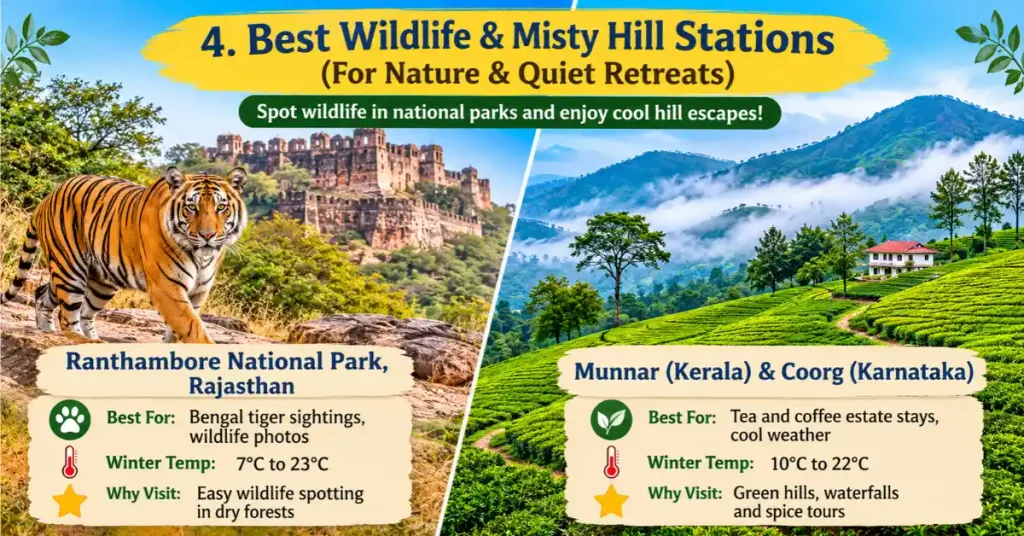
Ranthambore National Park, Rajasthan
- Best For: Bengal tiger sightings, wildlife photos, and weekend drives from Delhi or Jaipur
- Winter Temperature: 7°C to 23°C
- Why Visit: Winter dries out thick monsoon plants, making it easier to spot wildlife inside Ranthambore’s forests around the old fort. Book morning and afternoon jeep or canter safaris months early on the official Rajasthan Forest Department website (fmdss.forest.rajasthan.gov.in).
Munnar (Kerala) & Coorg (Karnataka)
- Best For: Tea and coffee estate stays, cool weather without harsh cold, and short breaks
- Winter Temperature: 10°C to 22°C
- Why Visit: South India’s Western Ghats give cool 12°C mornings without needing heavy winter gear for freezing cold. Wake up near green tea hills in Munnar or stay in a coffee estate bungalow in Coorg (Kodagu). You can also visit waterfalls, take spice tours, and walk through forest trails.
Best Winter Destinations in India: Weather, Trip Duration & Budget
| Destination | Main Experience | Average Winter Temperature | Recommended Trip Duration | Estimated Budget Per Person (Excl. Flights) |
|---|---|---|---|---|
| Gulmarg & Srinagar | Snowfall, skiing and winter adventures | -8°C to 6°C | 5–6 days | ₹22,000–₹38,000 |
| Auli | Snow-covered slopes and stunning Himalayan views | -4°C to 8°C | 4–5 days | ₹15,000–₹25,000 |
| Manali & Solang Valley | Snow activities, family outings and mountain scenery | -2°C to 10°C | 4–5 days | ₹12,000–₹22,000 |
| Andaman Islands | Tropical beaches, scuba diving and water sports | 23°C to 30°C | 5–7 days | ₹25,000–₹42,000 |
| Goa | Sunny beaches, nightlife and water activities | 21°C to 32°C | 3–5 days | ₹14,000–₹28,000 |
| Kerala (Munnar & Alleppey) | Scenic tea plantations, backwaters and houseboat stays | 12°C to 30°C | 5–6 days | ₹18,000–₹32,000 |
| Rajasthan (Udaipur & Jaisalmer) | Historic forts, royal palaces and desert experiences | 8°C to 24°C | 5–7 days | ₹16,000–₹30,000 |
| Rann of Kutch | White salt desert, cultural festivals and local traditions | 7°C to 25°C | 3–4 days | ₹15,000–₹28,000 |
Note: These are approximate per-person budget estimates covering mid-range shared accommodation, local transportation and meals. Travel costs and hotel rates can increase significantly during the peak holiday period from 20 December to 5 January.
Practical Winter Travel Tips for Indian Travellers
Avoid Peak Holiday Price Spikes: Hotel rates in Goa, Udaipur, Manali, and Gulmarg often double from 20 December to 5 January. Travelling in November, early December, or February gives you similar winter weather with 30% to 50% lower room rates and fewer crowds.
Plan for North India Fog Delays: From late December to mid-January, thick morning fog in Delhi, Uttar Pradesh, Punjab, and Bihar often delays early flights and overnight trains. Keep a 4- to 6-hour buffer if you take connecting flights through Delhi (DEL).
Wear Layers Instead of One Heavy Coat: Rajasthan can feel warm in afternoon sun and chilly at night. Himachal can have warm rooms and freezing outdoor air. Wearing layers—a thermal base, a fleece middle layer, and a windproof outer jacket—helps you adjust easily.
Check Snow and Road Updates Before You Go: Heavy snow can briefly close high passes like Rohtang, Sela, or the road between Srinagar and Gulmarg. Check weather updates on the India Meteorological Department website (mausam.imd.gov.in) 48 hours before your trip.
READ ALSO:-Arunachal Pradesh Travel Guide 2026: Best Places, Budget & Travel Tips
FAQ
1. Which places in India get guaranteed snowfall in December and January?
High places above 8,500 feet—such as Gulmarg (Kashmir), Auli (Uttarakhand), Solang Valley / Sissu near Manali (Himachal Pradesh), and Tawang (Arunachal Pradesh)—have the best chance of snow in late December, January, and February. Lower hill stations like Shimla, Mussoorie, and Nainital sometimes get snow, usually in January or February rather than December.
2. What are the best warm places to visit in India during winter?
If you want to skip cold weather, the Andaman Islands, Goa, Kerala (Alleppey, Varkala, Kovalam), Pondicherry, and Gokarna stay warm and sunny at 22°C to 31°C all winter.
3. Which are the best winter destinations in India for families with kids and senior citizens?
Rajasthan (Jaipur and Udaipur), Kerala (Munnar, Thekkady, and Alleppey), Goa, and Coorg work well for mixed-age families. They have easy road access, mild daytime weather, simple sightseeing without hard hikes, and many family-friendly stays.
4. Where should couples go for a winter honeymoon in India?
For a snowy, cosy honeymoon, Gulmarg and Pahalgam in Kashmir or small boutique stays in Manali are popular picks. For warm beaches and quiet stays, try Havelock Island (Andaman), South Goa, or a private pool villa in Udaipur or Kumarakom (Kerala).
5. Is Goa or the Andaman Islands better in December?
Pick Goa if you want lively beach shacks, nightlife, music festivals, and short flights from big Indian cities. Pick the Andaman Islands if you want quieter white-sand beaches, clear water for scuba diving and snorkelling, and a slower island pace.
6. What are the best budget winter destinations in India under ₹15,000?
For a 3- to 4-day trip under ₹15,000 per person (excluding flights), look at Rishikesh and Mussoorie (Uttarakhand), Jaipur and Pushkar (Rajasthan), Varkala (Kerala), Pondicherry, or McLeod Ganj (Himachal Pradesh). Overnight trains or state Volvo buses help keep travel costs low.
7. Is winter a good time to visit Ladakh or Spiti Valley?
Winter in Ladakh and Spiti Valley is harsh. Temperatures can drop below -15°C to -25°C, water pipes can freeze, and most hotels close. Unless you are doing a special winter trip (like snow leopard tracking in Ladakh), visit Ladakh and Spiti between May and September instead.
8. How early should I book tickets and hotels for a winter trip in India?
For trips between 20 December and 5 January, book flights and hotels 2 to 3 months early to avoid high holiday prices. For wildlife safaris in Ranthambore, Jim Corbett, or Kaziranga, book online permits as soon as the 90-day booking window opens.
9. What are the best winter destinations in South India?
Top winter spots in South India include Munnar and Alleppey (Kerala), Coorg and Chikmagalur (Karnataka), Ooty and Kodaikanal (Tamil Nadu), Pondicherry, and the temple ruins of Hampi (Karnataka). Winter brings comfortable 15°C to 26°C weather there.
10. What essentials should I pack for a North India winter trip?
Pack thermal innerwear (top and bottom), a warm fleece sweater, a windproof down jacket, woollen socks, gloves, and a cap that covers your ears. Also bring moisturiser, lip balm, sunglasses (for snow glare), and waterproof shoes with good grip so you do not slip on black ice.
1 thought on “Best Winter Destinations in India (2026–27): Snow, Beaches & Culture”