
Spiritual
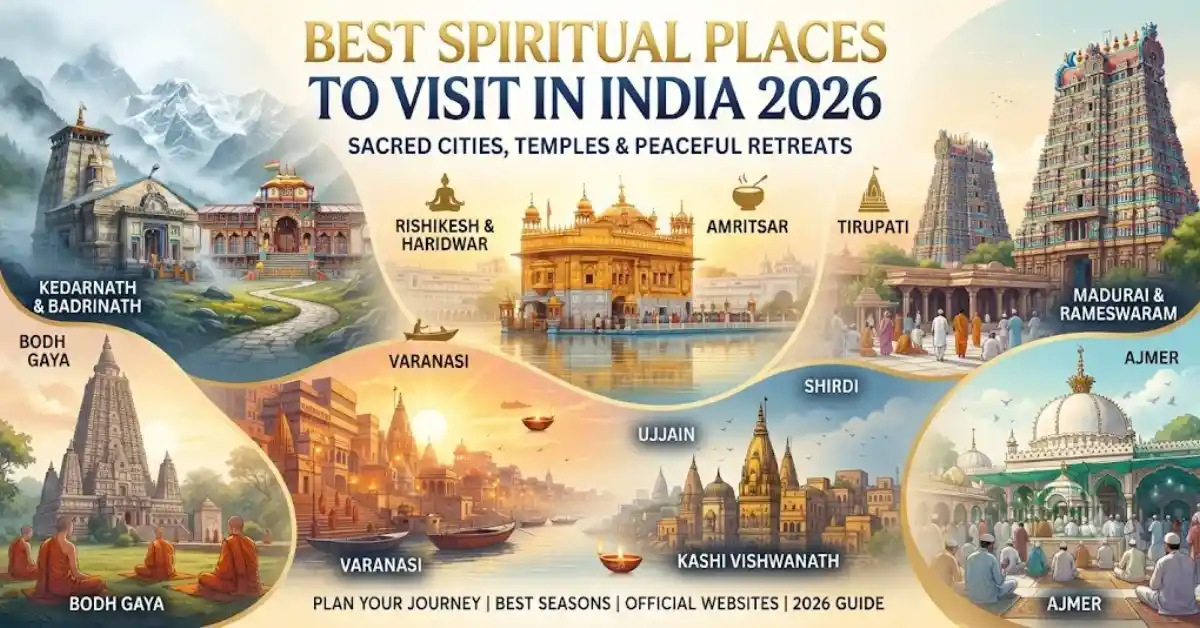
The best spiritual places to visit in India include Varanasi, Rishikesh, and Haridwar for sacred river rituals and yoga. Visit Amritsar and Ajmer for Sikh and Sufi devotion. Choose Tirupati, Madurai, Rameswaram, Ujjain, and Shirdi for famous temple pilgrimages. Go to Kedarnath and Badrinath for Himalayan yatras, and Bodh Gaya and Dharamshala for Buddhist heritage and quiet meditation.
Key Takeaways
- Match the Place to Your Goal: Choose river ghats and ashrams for yoga and quiet thought, major temple towns for planned darshan, or Himalayan and Buddhist towns for peaceful retreats.
- Check the Season First: Plains and southern temple cities feel most pleasant between October and March. High-altitude Himalayan shrines like Kedarnath and Badrinath open only during warmer months (usually late April or May to October or November).
- Use Official Websites for Darshan & Stays: Major shrines like Tirupati, Kashi Vishwanath, Mahakaleshwar, and Char Dham offer online registration or darshan slots. Always book directly on verified temple trust websites.
- Plan a Realistic INR Budget: Depending on train or flight tickets and hotel or dharamshala stays, a 3-to-5-day spiritual trip often costs about ₹6,000 to ₹25,000+ per person.
Introduction
India offers many spiritual experiences, from ancient riverbanks and tall South Indian temples to quiet monasteries, busy langar halls, and snowy Himalayan valleys. Travel effort, crowd levels, and weather change a lot across regions. Picking the right destination helps a lot, especially when you travel with elderly family members. This guide compares India’s top spiritual places, best seasons, nearby stations or airports, and useful planning tips.
Quick Comparison: Top Spiritual Places to Visit in India
| Destination | State / UT | Primary Spiritual Focus | Best Months to Visit | Nearest Major Transit Hub |
| Varanasi | Uttar Pradesh | Kashi Vishwanath, Ganga ghats & heritage | Oct – Mar | Varanasi Jn (BSB) / LBS Airport |
| Rishikesh & Haridwar | Uttarakhand | Yoga, meditation, ashrams & Ganga Aarti | Sept – Apr | Haridwar Jn (HW) / Dehradun Airport |
| Amritsar | Punjab | Sri Harmandir Sahib (Golden Temple) & seva | Oct – Mar | Amritsar Jn (ASR) / SGRDJ Airport |
| Tirupati | Andhra Pradesh | Sri Venkateswara Swamy Temple (Tirumala) | Sept – Mar | Tirupati (TPTY) / Tirupati Airport |
| Bodh Gaya | Bihar | Mahabodhi Temple & Buddhist meditation | Oct – Mar | Gaya Jn (GAYA) / Gaya Airport |
| Kedarnath & Badrinath | Uttarakhand | Char Dham Himalayan pilgrimage | May – Jun & Sept – Oct | Haridwar / Rishikesh + road/trek |
| Madurai & Rameswaram | Tamil Nadu | Dravidian temple architecture & Jyotirlinga | Oct – Mar | Madurai Jn (MDU) / Madurai Airport |
| Ujjain | Madhya Pradesh | Mahakaleshwar Jyotirlinga & Shipra ghats | Oct – Mar | Ujjain Jn (UJN) / Indore Airport |
| Dharamshala & McLeod Ganj | Himachal Pradesh | Tibetan Buddhist monasteries & retreats | Mar – Jun & Sept – Nov | Pathankot Cantt / Kangra Airport |
| Shirdi | Maharashtra | Sai Baba Samadhi Mandir | Oct – Mar | Sainagar Shirdi (SNSI) / Shirdi Airport |
| Ajmer | Rajasthan | Ajmer Sharif Dargah (Sufi heritage) | Oct – Mar | Ajmer Jn (AII) / Kishangarh Airport |
Best Spiritual Places in India

Sacred River Cities & Himalayan Shrines
1. Varanasi, Uttar Pradesh
Varanasi is regarded as one of the oldest continuously inhabited cities in the world. Daily devotion here centres around the curved ghats (riverfront steps) of the Ganga.
- Key experiences: Have darshan at the Kashi Vishwanath Temple, watch the evening Ganga Aarti at Dashashwamedh Ghat, and take a calm sunrise boat ride. You can also visit nearby Sarnath, where Gautama Buddha gave his first sermon.
- Planning tip: Winter mornings (December–January) can be foggy and cold. Pack warm layers and stay near easy-to-reach lanes if you are travelling with senior citizens.
2. Rishikesh & Haridwar, Uttarakhand
Located where the Ganga enters the northern plains, these twin towns bring together traditional pilgrimage and global yoga and meditation centres.
- Key experiences: Attend the evening Ganga Aarti at Har Ki Pauri (Haridwar) or Parmarth Niketan and Triveni Ghat (Rishikesh). Stay in an ashram, join meditation classes, or enjoy quiet walks near Tapovan or Neelkanth Mahadev.
- Planning tip: Avoid peak monsoon months (July–August) because heavy rain can cause hill-road delays around Rishikesh.
3. Kedarnath & Badrinath, Uttarakhand
Part of Uttarakhand’s Chota Char Dham circuit, these high-mountain shrines attract devotees looking for peaceful peaks and traditional pilgrimage.
- Key experiences: Visit Kedarnath Temple (reached via an about 16–18 km trek from Gaurikund or licensed helicopter services) and Badrinath Temple beside the Alaknanda River.
- Planning tip: Both temples close for winter (usually around Diwali or Bhai Dooj) and reopen in late April or May. You must register on the official Uttarakhand Tourism portal before going. Avoid peak monsoon (July–August) because of landslide risks.
Iconic Temple Towns & Jyotirlinga Hubs
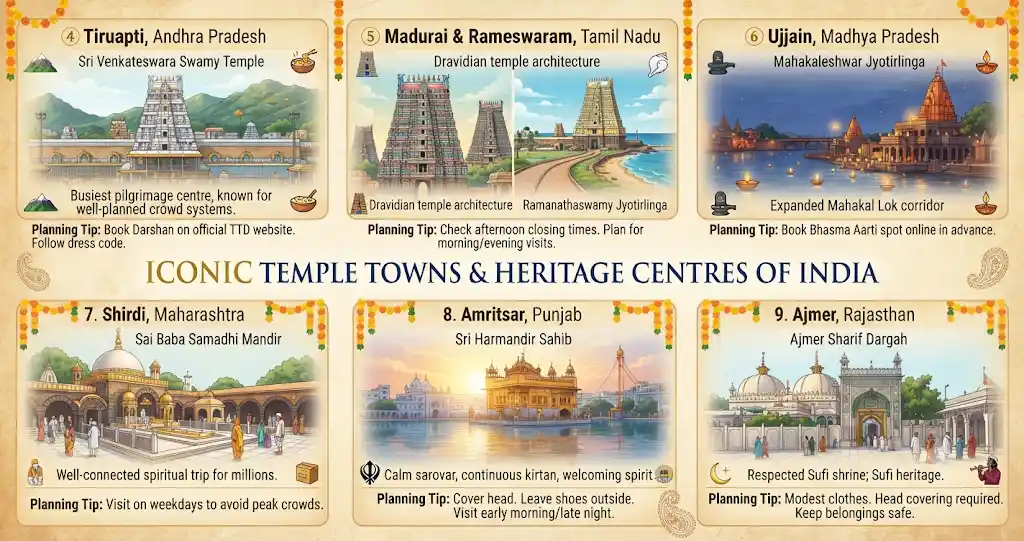
4. Tirupati, Andhra Pradesh
The hill shrine of Sri Venkateswara Swamy at Tirumala is one of India’s busiest pilgrimage centres, known for well-planned crowd systems.
- Key experiences: Have darshan at Tirumala Temple, visit Sri Padmavathi Ammavari Temple in Tiruchanoor, and try the free community meals (Annaprasadam).
- Planning tip: Book Special Entry Darshan (SED) or rooms well ahead of time only on the official Tirumala Tirupati Devasthanams (TTD) website (
ttdevasthanams.ap.gov.in). Follow the traditional dress code rules.
5. Madurai & Rameswaram, Tamil Nadu
Tamil Nadu’s temple towns are famous for tall, detailed gopurams (temple entrance towers) and living classical traditions.
- Key experiences: Visit Meenakshi Amman Temple in Madurai, then head to Ramanathaswamy Temple (one of the twelve Jyotirlingas) and the coastal road toward Dhanushkodi in Rameswaram.
- Planning tip: Main temple shrines often close for a few hours in the afternoon (usually around 12:30 PM to 4:00 PM). Plan your visit for the morning or evening.
6. Ujjain, Madhya Pradesh
Set along the Shipra River, Ujjain is home to Mahakaleshwar, one of India’s twelve Jyotirlingas, along with the expanded Mahakal Lok corridor.
- Key experiences: Visit Mahakaleshwar Temple, watch the evening Aarti at Ram Ghat, and see Kal Bhairav and Harsiddhi temples.
- Planning tip: To attend the early-morning Bhasma Aarti, book your spot online in advance on the official temple trust website.
7. Shirdi, Maharashtra
Shirdi welcomes millions of Sai Baba devotees looking for a simple, well-connected spiritual trip.
- Key experiences: Have darshan at the Sai Baba Samadhi Mandir, visit Dwarkamai and Chavadi, and eat at the large Prasadalaya dining hall.
- Planning tip: Thursdays and major festivals bring larger crowds.Visiting on weekdays, outside school holiday periods, usually means fewer crowds and a more peaceful experience.
Sikh & Sufi Heritage Centres
8. Amritsar, Punjab
Amritsar centres on Sri Harmandir Sahib (the Golden Temple), loved for its calm sarovar (sacred pool), continuous kirtan, and welcoming spirit.
- Key experiences: Listen to Gurbani kirtan inside the complex, volunteer or eat at Guru Ka Langar (which serves tens of thousands of people every day), and watch the early-morning Palki Sahib ceremony.
- Planning tip: Cover your head respectfully inside the complex (headscarves are available there), leave shoes and socks at the counters, and go early in the morning or late at night for fewer crowds.
9. Ajmer, Rajasthan
Ajmer is home to the Dargah Sharif of Khwaja Moinuddin Chishti, one of South Asia’s most respected Sufi shrines, right next to the sacred town of Pushkar.
- Key experiences: Offer prayers at Ajmer Sharif Dargah, listen to evening qawwalis, and take a short drive over Nag Pahar to see Pushkar Lake and Brahma Temple.
- Planning tip: Wear modest clothes with a head covering, keep bags and phones safe in narrow market lanes, and skip peak Urs festival days unless you plan to attend the event.
Buddhist Sites & Meditation Retreats
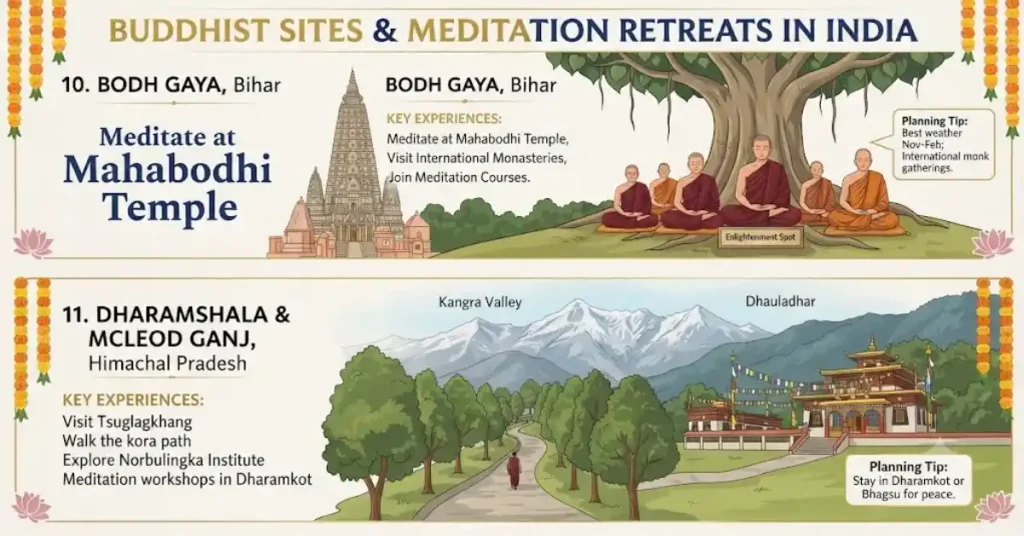
10. Bodh Gaya, Bihar
Bodh Gaya is the holiest site in Buddhism, where Siddhartha Gautama reached enlightenment under the Bodhi Tree.
- Key experiences: Meditate at the UNESCO-listed Mahabodhi Temple Complex, visit monasteries built by Buddhist groups from Japan, Thailand, Tibet, and Bhutan, and join short meditation courses.
- Planning tip: November to February brings cool, comfortable weather and international monk gatherings to the town.
11. Dharamshala & McLeod Ganj, Himachal Pradesh
Set in the Kangra Valley below the Dhauladhar mountains, McLeod Ganj is the home of the 14th Dalai Lama and a centre for Tibetan Buddhist study and quiet retreats.
- Key experiences: Visit Tsuglagkhang Complex (Dalai Lama Temple), walk the tree-lined kora path, explore Norbulingka Institute, and join meditation workshops in nearby Dharamkot.
- Planning tip: Stay in Dharamkot or quiet Bhagsu lanes if you want peace away from main market traffic.
How to Plan a Smooth Spiritual Trip in India
- Book Only on Official Temple & Shrine Websites: Whether booking TTD slots in Tirupati, Bhasma Aarti in Ujjain, or Char Dham registration in Uttarakhand, use official government or temple trust websites to avoid middlemen.
- Match Walking Effort to Your Group: If you travel with elderly parents or people with knee pain, flat, well-connected towns like Amritsar, Shirdi, Rishikesh, or Bodh Gaya are much easier than steep treks like Kedarnath or multi-step hill temples.
- Check Dress Codes & Camera Rules: Most major Indian temples, gurudwaras, and dargahs require modest clothes covering shoulders and knees. Carry a head covering for Sikh and Sufi shrines, and expect phone or camera bans inside main prayer halls.
- Estimate Your INR Budget:
- Budget Pilgrimage (Sleeper/3AC train, dharamshala or budget lodge, simple meals): About ₹6,000 – ₹12,000 per person for 3–4 days.
- Mid-Range Comfort (3AC/2AC train or economy flight, clean 3-star hotel, local cab): About ₹14,000 – ₹25,000+ per person for 3–4 days.
READ ALSO:-Best Places to Visit in Thailand 2026: Top Cities, Beaches & Cultural Spots
Frequently Asked Questions
Which are the best spiritual places to visit in India for peace and meditation?
For quiet reflection and guided meditation, Rishikesh, Bodh Gaya, and Dharamshala (McLeod Ganj and Dharamkot) are top picks. They have well-known meditation centres, calm walking trails, and slower daily routines than busy temple towns.
Which spiritual places in India are best for senior citizens?
Amritsar (Golden Temple), Shirdi, Rishikesh, and Bodh Gaya offer mostly flat paths, comfortable hotels, and easy train or flight access. Major shrines like Tirupati and Kashi Vishwanath also provide special help or battery-operated carts for elderly visitors—check official trust rules before you go.
What is the best time of year to visit spiritual places in India?
October to March is best for most spiritual spots across northern, central, and southern India—including Varanasi, Amritsar, Bodh Gaya, Tirupati, and Madurai—because daytime weather stays comfortable. For high-mountain shrines like Kedarnath and Badrinath, May–June and September–October are the safest months.
How can I avoid long queues at major Indian temples?
Book online darshan slots early where offered (such as TTD in Tirupati or official portals in Ujjain and Varanasi). Visit on non-festival weekdays (Tuesdays and Wednesdays are often calmer than weekends), and arrive early in the morning right when temple doors open.
Are there spiritual places in India that welcome people of all faiths?
Yes. Sri Harmandir Sahib (Golden Temple) in Amritsar, Ajmer Sharif Dargah, Bodh Gaya’s Mahabodhi Temple, and meditation centres in Rishikesh and Dharamshala openly welcome respectful visitors from every background.
How much does a short spiritual trip in India cost?
A 3-to-4-day spiritual trip usually costs about ₹6,000 to ₹12,000 per person on a budget using trains and dharamshalas. A mid-range trip with flights, 3-star hotels, and local cabs typically costs ₹14,000 to ₹25,000+ per person.
What should I wear when visiting spiritual places in India?
Wear modest, comfortable clothes that cover your shoulders and knees. Carry a scarf, dupatta, or handkerchief to cover your head at gurudwaras and dargahs, and wear shoes or sandals that slip off easily at footwear counters.
Can I combine two or three spiritual destinations in one trip?
Yes. Popular short routes include Haridwar + Rishikesh, Varanasi + Sarnath + Bodh Gaya, Madurai + Rameswaram, and Ajmer + Pushkar. Grouping nearby places cuts travel fatigue and gives you unhurried time at each stop.
1 thought on “Best Spiritual Places to Visit in India 2026: Sacred Cities, Temples & Peaceful Retreats”