
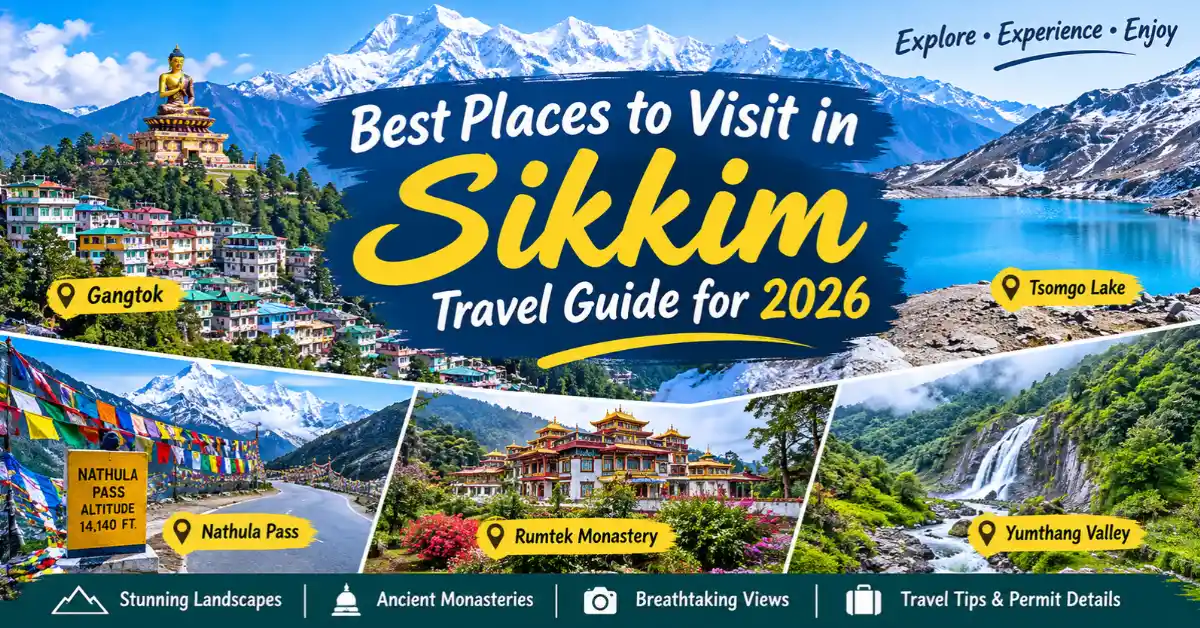
Some of the best places to explore in Sikkim include Gangtok, Tsomgo (Changu) Lake, Nathu La Pass, Gurudongmar Lake, Yumthang Valley, Zero Point, Pelling, Ravangla, Namchi, and Zuluk. Nestled in the Eastern Himalayas, Sikkim is known for its steep mountain terrain, winding roads, and breathtaking landscapes. To make trip planning easier, you can divide the state into four main regions: East Sikkim (Gangtok and Silk Route), North Sikkim (Lachen and Lachung), West Sikkim (Pelling and Yuksom), and South Sikkim (Ravangla and Namchi).
Key Takeaways
- Plan by region, not straight-line distance: A 100 km mountain drive in Sikkim usually takes 4 to 5 hours because of sharp hairpin bends and mountain weather.
- Aadhaar alone is not enough for permits: For border areas like Nathu La, Gurudongmar Lake, and Zuluk, Indian travellers must carry an original Voter ID, Passport, or Driving Licence along with passport-size photos.
- Apply for permits a day ahead: Individual tourists cannot walk up to checkpoints to get permits. A Sikkim-registered travel agent or taxi driver must submit your documents at least one day prior.
- Local taxis are mandatory for permit zones: Cabs registered in West Bengal (Bagdogra, NJP, or Siliguri) can drop you at Gangtok or Pelling, but only Sikkim-registered vehicles are allowed into Tsomgo, Nathu La, and North Sikkim.
- Two peak windows: March to May brings blooming rhododendrons and clear mountain views, while October to December offers crisp skies and early winter snow.
Tucked between Nepal, Bhutan, and Tibet, Sikkim is India’s cleanest, greenest, and first 100% organic state. In a compact area, it packs snow-fed glacial lakes, peaceful Buddhist monasteries, green tea gardens, and stunning views of Mount Kanchenjunga, the world’s third-highest peak.
Most Indian travellers enter Sikkim via Bagdogra Airport (IXB) or New Jalpaiguri Railway Station (NJP) in West Bengal, followed by a 4-to-5-hour scenic drive up NH10 to Gangtok. To help you plan a realistic route without wasting time on the road, here is a region-wise guide to the best places to visit in Sikkim in 2026.
2026 Quick Comparison: Top Places & Permit Rules
| Region | Top Destinations | Permit Needed for Indians? | Key Highlight |
| East Sikkim (Central) | Gangtok, Rumtek, MG Marg | No | Capital hub, monasteries, shopping & cafes |
| East Sikkim (Border) | Tsomgo Lake, Baba Mandir, Nathu La | Yes (Protected Area Permit) | Glacial lake, Indo-China border pass |
| East Sikkim (Silk Route) | Zuluk, Gnathang Valley, Kupup | Yes (Rongli Permit) | 32 hairpin bends, sunrise over Kanchenjunga |
| North Sikkim | Lachen, Gurudongmar Lake, Lachung, Yumthang, Zero Point | Yes (Protected Area Permit) | High-altitude lakes, alpine flower valleys, snow |
| West Sikkim | Pelling, Skywalk, Khecheopalri Lake, Yuksom | No (except high treks) | Closest Kanchenjunga views, heritage ruins |
| South Sikkim | Ravangla, Namchi, Temi Tea Garden | No | Giant Buddha statue, Char Dham, tea estates |
1. East Sikkim: Gangtok, Nathu La & The Old Silk Route
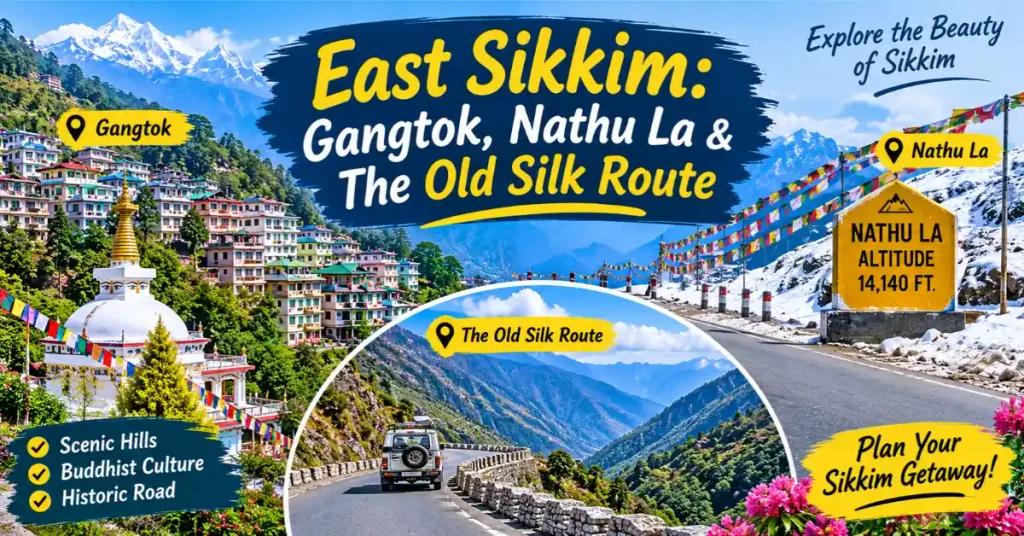
East Sikkim is the primary gateway to the state and serves as a convenient base for exploring many of its popular tourist attractions. From bustling markets and ancient monasteries to high-altitude lakes and scenic mountain passes, this region offers a mix of culture, history, and adventure.
Gangtok & MG Marg
Gangtok, the capital of Sikkim, beautifully combines modern city life with traditional Buddhist culture. MG Marg is a clean, vehicle-free shopping street lined with souvenir stores, bakeries, cafes, and restaurants serving local favourites such as thukpa, momos, and phagshapa. While exploring the city, you can also visit Do Drul Chorten and the Namgyal Institute of Tibetology or enjoy panoramic valley views from the Gangtok Ropeway.
Rumtek Monastery
Situated around 24 km from Gangtok, Rumtek Monastery is one of Sikkim’s largest and most significant Buddhist monasteries. It is closely associated with the Karmapa Lama and features traditional Tibetan architecture, a beautiful golden stupa, and peaceful prayer halls. Its serene surroundings make it an excellent place to experience Sikkim’s Buddhist heritage.
Tsomgo (Changu) Lake & Baba Mandir
Located approximately 40 km from Gangtok at an altitude of 12,313 feet, Tsomgo Lake is a beautiful high-altitude glacial lake considered sacred by local communities. The lake often freezes during winter, while spring brings stunning reflections of the surrounding snow-covered mountains. Visitors can also enjoy yak rides along its banks. A little further ahead is the Baba Harbhajan Singh Memorial Temple, dedicated to an Indian Army soldier popularly remembered as the “Hero of Nathula.”
Nathu La Pass
Situated around 56 km from Gangtok at an elevation of 14,140 feet, Nathu La is a historic mountain pass along the India-China border. It is among the highest motorable border passes accessible to Indian tourists. Visitors can reach the designated border area and see the Indian and Chinese military posts from close quarters.
Important 2026 Travel Rule: Entry to Nathu La is restricted to Indian citizens and requires a valid permit. The pass generally remains closed on Mondays for maintenance and military activities. Check the latest access status before planning your visit.
Zuluk & The Old Silk Route
For travellers who enjoy scenic mountain journeys and less-crowded destinations, the Old Silk Route is worth exploring. This historic trade corridor once connected India and Tibet through places such as Rongli, Zuluk, Gnathang Valley, and Kupup. Zuluk is particularly famous for its dramatic 32 hairpin bends, which create a spectacular zigzag pattern along the mountainside. Visit Thambi View Point to witness beautiful sunrise views over the Kanchenjunga mountain range.
2. North Sikkim: High-Altitude Lakes & Alpine Valleys
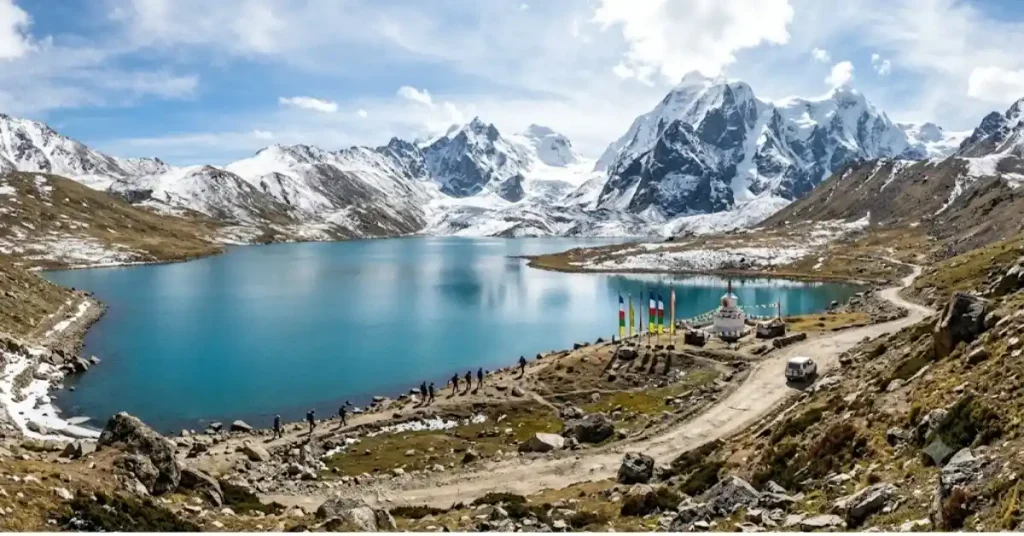
North Sikkim is famous for snow and high-altitude mountain scenery. Trips here are usually booked as 1-night/2-day or 2-night/3-day tour packages from Gangtok via Mangan and Chungthang.
Lachen & Gurudongmar Lake
Lachen is a quiet mountain village that acts as the base for Gurudongmar Lake (17,800 feet), one of the highest lakes in the world. Framed by snowy peaks, the bright blue lake stays partly unfrozen even in peak winter and is sacred to both Buddhists and Sikhs. Because oxygen is very low at 17,800 feet, travellers leave Lachen early at 4:00 AM and spend only 20 to 30 minutes at the lake.
Lachung, Yumthang Valley & Zero Point
On the eastern side of North Sikkim lies Lachung, a scenic village near the Lachung Chu river. From here, you can drive up to:
- Yumthang Valley (11,800 feet): Often called the Sikkim Valley of Flowers, Yumthang blooms with bright red, pink, and purple rhododendrons between April and May.
- Zero Point (Yumesamdong, 15,300 feet): Located 25 km past Yumthang where the normal road ends, Zero Point is surrounded by snow-covered peaks almost all year. (Note: Visiting Zero Point requires an extra on-the-spot vehicle fee arranged through your tour operator).
Dzongu
Situated near Mangan, Dzongu is a protected region and the traditional home of the indigenous Lepcha community. Unlike Sikkim’s crowded tourist destinations, this peaceful area offers a more relaxed travel experience. Visitors can explore bamboo bridges, cardamom plantations, traditional homestays, and beautiful mountain landscapes while experiencing the local Lepcha culture and lifestyle.
3. West Sikkim: Kanchenjunga Views & Heritage
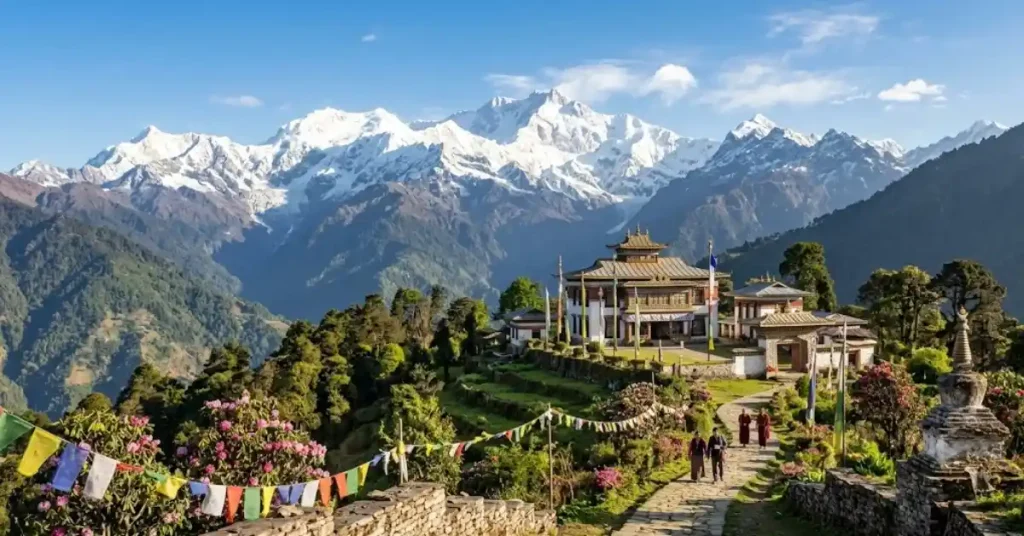
West Sikkim is a wonderful destination for travellers seeking peaceful hill towns, historic monasteries, ancient ruins, and spectacular views of the Kanchenjunga range. Unlike restricted border areas, most regular tourist destinations in this region do not require Protected Area Permits.
Pelling (Skywalk, Pemayangtse & Rabdentse)
Located at an altitude of around 7,200 feet, Pelling offers breathtaking views of Mount Kanchenjunga. It is one of the best places in Sikkim to enjoy Himalayan scenery and explore the region’s cultural heritage. Major attractions include:
- Pelling Skywalk & Chenrezig Statue: Visit India’s first glass skywalk, which leads towards an impressive 137-foot statue of Chenrezig (Avalokiteshvara). The glass pathway offers beautiful views of the surrounding mountains and valleys.
- Pemayangtse Monastery: Established in 1705, this is one of Sikkim’s oldest and most important monasteries. It is famous for its traditional Tibetan architecture and a remarkable seven-tiered wooden model depicting Guru Rinpoche’s heavenly abode.
- Rabdentse Ruins: Explore the remains of Sikkim’s second capital, dating back to the 17th century. A short walk through a beautiful forest trail takes you to the historic ruins, offering scenic views and a glimpse into Sikkim’s royal past.
Khecheopalri Lake
Surrounded by dense forests between Pelling and Yuksom, Khecheopalri Lake is considered sacred and is popularly known as a wish-fulfilling lake. According to local belief, birds quickly remove any leaves that fall into the water, keeping its surface remarkably clean. Its peaceful surroundings make it an ideal spot for nature lovers and spiritual travellers.
Yuksom
Often called the “Gateway to Kanchenjunga,” Yuksom holds an important place in Sikkim’s history. It became the state’s first capital in 1642 and is now a quiet village popular among nature lovers and adventure enthusiasts. Yuksom also serves as a major starting point for multi-day Himalayan treks to Dzongri and Goecha La within the Kanchenjunga National Park region..
4. South Sikkim: Monasteries, Statues & Tea Gardens
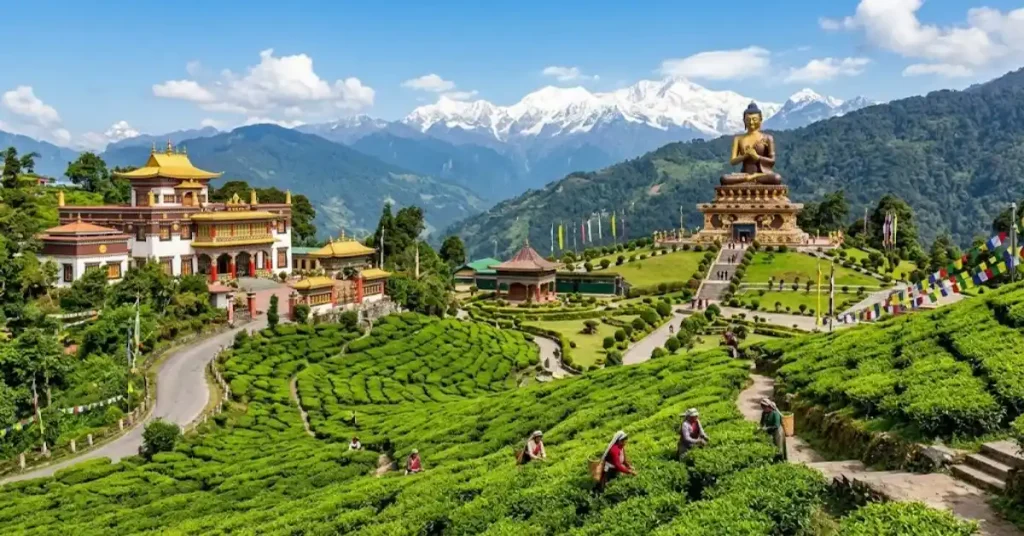
South Sikkim is known for its peaceful hill towns, beautiful monasteries, impressive religious statues, and scenic tea plantations. With its relatively lower altitude and pleasant surroundings, the region is a comfortable choice for families travelling with children and elderly members.
Ravangla (Buddha Park)
Ravangla is home to Tathagata Tsal, popularly known as Buddha Park. The park features a magnificent 130-foot golden statue of Shakyamuni Buddha, set against beautifully maintained gardens and stunning Himalayan mountain views. Established in 2013 to mark the 2,550th birth anniversary of Gautama Buddha, it is one of the most popular photography spots in Sikkim.
Namchi (Char Dham & Samdruptse)
- Siddhesvara Dham (Char Dham): This impressive hilltop pilgrimage complex features a 108-foot statue of Lord Shiva, along with replicas of India’s four major pilgrimage sites: Badrinath, Jagannath, Dwarka, and Rameswaram. The complex also houses representations of the twelve Jyotirlingas, making it an important religious destination.
- Samdruptse Hill: Located near Namchi, Samdruptse Hill is famous for its towering 135-foot statue of Guru Padmasambhava, also known as Guru Rinpoche. The statue overlooks the surrounding valleys and is an important spiritual landmark in Sikkim.
Temi Tea Garden
Located in South Sikkim, Temi Tea Garden is the state’s only tea estate. Established in 1969, it is famous for producing high-quality organic tea. The plantation stretches across beautiful rolling hills, with scenic walking routes and cherry blossom trees that add colour to the landscape during their flowering season, usually around November. It is an ideal stop for nature lovers, photography enthusiasts, and anyone looking to enjoy Sikkim’s peaceful countryside.
Essential Travel Rules for Indian Tourists Visiting Sikkim in 2026
Before planning your Sikkim holiday, make sure you understand these important travel guidelines and permit requirements to avoid last-minute problems.
- Mandatory Permit Documents (Aadhaar Alone Is Not Accepted): Individual tourists cannot apply directly for Protected Area Permits (PAP). Your Sikkim-registered tour operator or driver must arrange the permit at least one day before your visit. Carry original documents along with photocopies of your Voter ID, Passport, or Driving Licence, as well as 2–4 recent passport-size photographs per person. An Aadhaar card alone is not accepted as proof of citizenship for restricted destinations such as Nathu La, Gurudongmar Lake, and Zuluk. Children below 18 years must carry an original birth certificate or passport.
- Taxi & Vehicle Regulations: Vehicles registered in West Bengal (WB) can generally drop tourists from entry points such as NJP and Bagdogra to destinations like Gangtok and Pelling. However, for sightseeing trips to restricted areas such as Tsomgo Lake, Nathu La Pass, and North Sikkim, you may need to arrange a Sikkim-registered vehicle (SK). Additionally, vehicles travelling towards North Sikkim must cross the Toong checkpost before 4:00 PM, as per local district regulations.
- Sustainable Development Fee & Plastic Restrictions: Sikkim has strict rules against single-use plastic. Plastic bags and water bottles with a capacity below 2 litres are restricted in tourist areas such as Lachen and Lachung. Carry a reusable steel or insulated water bottle instead. Hotels and homestays may also collect a ₹50 per person Sustainable Development Fee during check-in, as applicable.
Best Time to Visit:
March to May (Spring): Nice weather (10°C–20°C in Gangtok), blooming flowers in Yumthang, and clear views of Kanchenjunga.
June to September (Monsoon): Heavy rain causes frequent landslides and road blocks, especially on NH10 and North Sikkim roads.
October to December (Autumn/Early Winter): Clear blue skies, crisp mountain views, and early snow at Nathu La, Gurudongmar, and Zero Point.
January to February (Peak Winter): Heavy snow can close Gurudongmar and Nathu La at times, though Gangtok, Pelling, and Ravangla stay open.
READ ALSO:-Best Places to Visit in Ladakh 2026: A Complete Circuit-Wise Guide for Travellers
FAQ
Is an Aadhaar card valid for Nathu La and Gurudongmar Lake permits?
No. An Aadhaar card by itself is not accepted by Sikkim authorities as proof of Indian citizenship for Protected Area Permits. Every adult must carry an original Voter ID card, Indian Passport, or Driving Licence, along with 2 to 4 passport-size photographs. Children under 18 must carry an original Birth Certificate or Passport.
Which day is Nathu La Pass closed?
Nathu La Pass is closed to tourists every Monday. On other days, entry depends on the weather and army clearance, and permits must be arranged at least a day in advance through a Sikkim-registered travel agent.
How many days are needed to cover Sikkim properly?
A 6-to-7-day trip is ideal if you want to cover Gangtok, Tsomgo Lake, Nathu La, and North Sikkim (Lachen and Lachung). If you want to add West Sikkim (Pelling) and South Sikkim (Ravangla and Namchi) at an easy pace, plan for 9 to 10 days.
Can foreign nationals visit Gurudongmar Lake and Nathu La?
No. Under Indian government security rules, foreign citizens and OCI cardholders are not allowed to visit Nathu La Pass, Gurudongmar Lake, or Zuluk. Foreign visitors must get an online Restricted Area Permit (RAP) via the e-FRRO portal before entering Sikkim and can visit Gangtok, Pelling, Tsomgo Lake, Lachen, and Yumthang Valley in groups of two or more through a registered agency.
What is the best month to see snow in Sikkim?
To see fresh snow without getting stuck in major road closures, visit in late March, April, November, or December. During these months, you can easily find snow at Zero Point, Yumthang Valley, Tsomgo Lake, and Nathu La Pass.
Which mobile network works best in Sikkim?
Airtel and Jio give strong 4G/5G connectivity in Gangtok, Pelling, Namchi, and Ravangla. In North Sikkim (Lachen and Lachung) and border areas, network signals can be weak, though BSNL and Jio sometimes work in village areas. Both prepaid and postpaid SIM cards from other Indian states work fine in Sikkim.
Is Gurudongmar Lake safe for kids and senior citizens?
Because Gurudongmar Lake sits at 17,800 feet, the oxygen level is very low. Doctors and local tour operators generally advise against taking children under 5 years old or senior citizens with heart or breathing issues to Gurudongmar Lake. Yumthang Valley (11,800 feet), Pelling, and Ravangla are much safer choices.
How do I reach Gangtok from Bagdogra Airport or NJP Station?
Gangtok is about 120 to 125 km from both Bagdogra Airport (IXB) and NJP Railway Station, taking about 4.5 to 5 hours via NH10. You can book a private taxi at the prepaid counter or take a shared cab (Sumo, Bolero, or Innova) from Siliguri’s SNT Bus Terminus or NJP station.
1 thought on “Best Places to Visit in Sikkim: Travel Guide for 2026”