
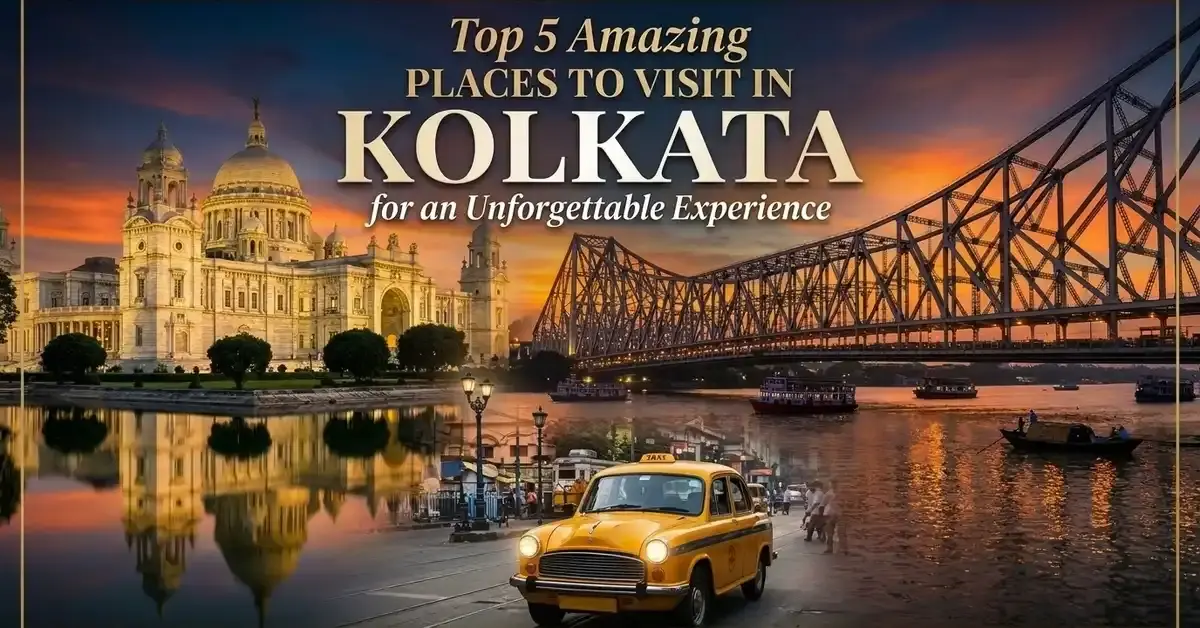
Kolkata is famous as the “City of Joy.” It is a city that beautifully mixes 300 years of colonial history, rich literature, deep spirituality, and amazing food.
If this is your first time visiting the capital of West Bengal, the huge city can feel a bit confusing. Traffic is often congested, and travelling from one attraction to another can take considerable time. You need a good plan.
To truly enjoy the best of Kolkata without getting stuck in traffic jams, you should focus on its five most famous landmarks. The five must-visit attractions include Victoria Memorial, Howrah Bridge, Dakshineswar Kali Temple, Belur Math, and the Indian Museum.
Key Takeaways for Travellers
- Plan by Location: Group your visits by area. Keep North Kolkata places (Dakshineswar and Belur Math) together for the morning. Visit Central Kolkata places (Victoria Memorial, Indian Museum, and Park Street) for the afternoon.
- Use the River Ferry: Do not waste an hour in road traffic between Dakshineswar and Belur Math. You can also enjoy a short 15-minute ferry journey across the Hooghly River instead. It only costs about ₹10 to ₹12 per person and offers great views.
- Check Closed Days: Victoria Memorial’s indoor museum is closed on Mondays, but the outdoor gardens stay open. The Indian Museum is closed on Mondays and all national holidays.
- Ride the Metro: The Kolkata Metro is fast and clean. The Blue Line runs North to South. The Green Line runs East to West, even going underwater beneath the Hooghly River. The metro is the best way to skip road traffic.
Top 5 Attractions in Kolkata
A quick travel guide to Kolkata’s iconic landmarks, metro access and sightseeing time.
| Attraction | Main Highlight | Nearest Metro Station | Time Needed |
|---|---|---|---|
| Victoria Memorial Historic Landmark | British-era white marble monument and history museum. | Maidan / Rabindra Sadan Blue Line | 2–3 Hours |
| Howrah Bridge Iconic City Landmark | Famous steel bridge with beautiful Hooghly River views. | Howrah Green Line | 1 Hour |
| Dakshineswar Temple Spiritual Destination | Beautiful 19th-century Hindu temple beside the river. | Dakshineswar Blue Line | 1.5–2 Hours |
| Belur Math Peaceful Riverside Retreat | Serene headquarters of the Ramakrishna Mission. | Dakshineswar + Ferry | 1.5–2 Hours |
| Indian Museum Heritage & Culture | One of India’s oldest and largest museums. | Park Street Blue Line | 2–3 Hours |
1. Victoria Memorial Hall: The Architectural Icon
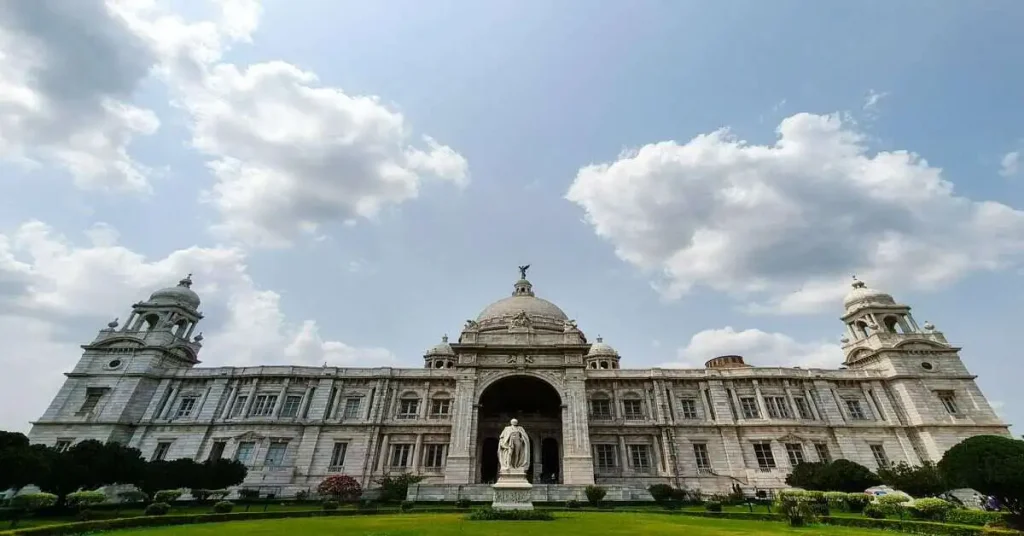
Set in the middle of 64 acres of beautiful green gardens, the Victoria Memorial is Kolkata’s most famous landmark.
The History and Architecture
The British built this massive monument between 1906 and 1921 to honour Queen Victoria. It is made entirely of white Makrana marble brought from Rajasthan—the same type of marble used for the Taj Mahal. The building features an Indo-Saracenic design. This means it beautifully mixes British, Mughal, and Venetian building styles.
At the very top of the central dome, you will see a 16-foot bronze statue called the Angel of Victory. It is mounted on ball bearings and actually spins with the wind like a weather vane.
What to See Inside
Inside the main hall, there is a large museum with 25 different galleries. You can see rare oil paintings, historical letters, antique weapons, and old artifacts from the days of the British Raj. The Calcutta Gallery is especially interesting because it shows the history and growth of the city itself.
The Gardens and Surroundings
Even if you do not go inside the museum, the gardens are worth the visit. You will find beautiful statues, large reflecting pools, and neatly cut lawns. It is a popular spot for locals to take a morning walk or relax in the evening.
Timings:
Gardens: Open every day from 5:30 AM to 6:00 PM.
Museum Galleries: Open from 10:00 AM to 6:00 PM. (Closed on Mondays and national holidays).
Entry Fees:
Garden only: ₹50 for Indian citizens.
Museum and Garden: ₹50 for Indian citizens. Foreign visitors and SAARC citizens pay a higher fee. You can buy tickets online to skip the weekend queues.
Nearest Transit: Maidan or Rabindra Sadan Metro Station (Blue Line).
Traveler Tip: Try to visit between 3:30 PM and 5:30 PM. First, explore the indoor galleries. Then, step outside just as the sun sets. The white marble building looks magical when the evening lights turn on. Also, try the famous Kolkata puchka (pani puri) from the street vendors just outside the gates!
2. Howrah Bridge (Rabindra Setu): The Lifeline of the City
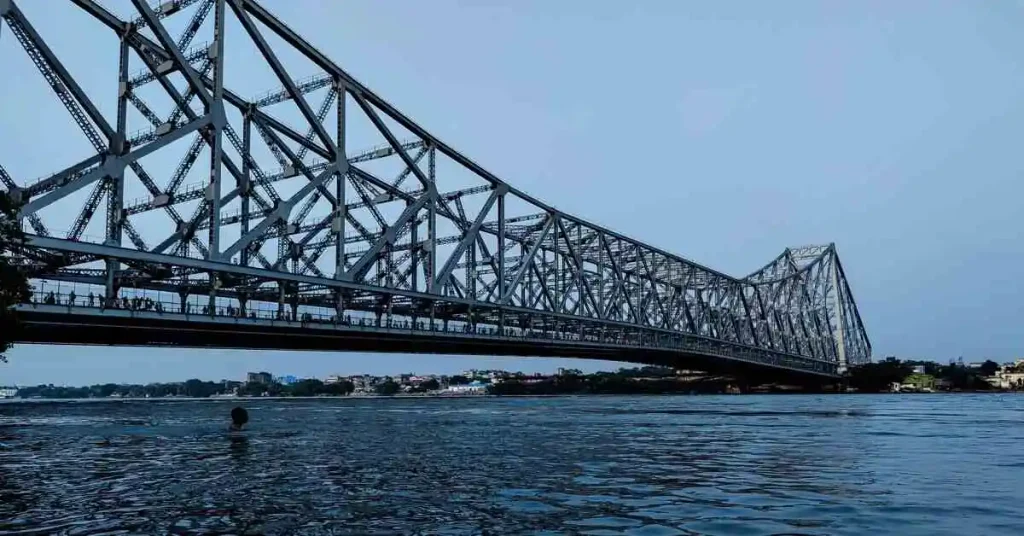
Howrah Bridge is not just a way to cross the Hooghly River; it is the beating heart of Kolkata. It connects the main city with the busy Howrah railway station.
An Engineering Marvel
Built during World War II and opened in 1943, this bridge is an engineering wonder. This cantilever bridge was constructed using around 26,500 tonnes of high-tensile steel, much of which was supplied by Tata Steel. One of its most remarkable features is that its structure was assembled without using traditional nuts or bolts. The entire massive structure is held together by steel rivets.
In 1965, the government renamed it Rabindra Setu to honour the great Bengali poet and Nobel winner, Rabindranath Tagore. However, almost everyone still calls it Howrah Bridge. Today, it ranks among the world’s most heavily used bridges, carrying a huge volume of daily traffic. Over 100,000 cars and countless walking pedestrians cross it every single day.
The Flower Market Experience
Right at the Kolkata end of the bridge sits the Mallick Ghat Flower Market. It is one of the largest flower markets in Asia. If you go early in the morning, you will see thousands of sellers trading bright orange marigolds, red roses, and white jasmine. It is a fantastic place to experience local life.
Timings: Open 24 hours a day, 7 days a week.
Entry Fee: Free.
Nearest Transit: Howrah Metro Station (Green Line) or Howrah Railway Station.
Important Rule: Photography on the bridge itself is strictly banned by the Kolkata Police for security reasons. Please do not take out big cameras while walking on the bridge.
Traveler Tip: To get the best photos of the bridge, do not stand on it. Instead, go to the Mallick Ghat Flower Market below it at 6:00 AM. You can also take a cheap ₹6 public ferry ride from Howrah Ghat to Babu Ghat to see the bridge from the middle of the river.
3. Dakshineswar Kali Temple: The Spiritual Anchor of North Kolkata
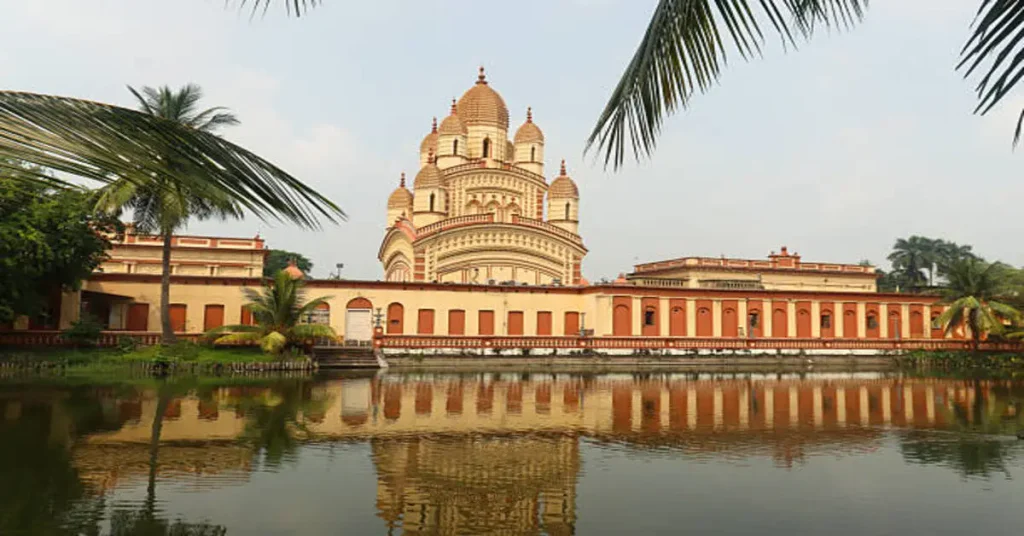
Located on the eastern bank of the Hooghly River, the Dakshineswar Kali Temple is one of the most sacred places in West Bengal.
The History and Significance
A wealthy and generous widow named Rani Rashmoni built the temple in 1855. According to local history, she was about to leave for Varanasi on a pilgrimage. The night before her trip, the Goddess Kali appeared in her dream and told her to build a temple by the river in Kolkata instead.
The temple is also famous because Sri Ramakrishna Paramahamsa, a great 19th-century saint and mystic, spent most of his life here serving as the main priest.
The Temple Architecture
The main temple is built in the traditional Bengali Navaratna (nine-spired) style. It is dedicated to Bhavatarini, a gentle form of Goddess Kali. The temple complex covers a vast area and offers a calm, relaxing atmosphere for visitors. Along the riverfront, there are 12 smaller, identical temples dedicated to Lord Shiva. There is also a shrine for Radha-Krishna and a sacred bathing spot (ghat) where people take a holy dip in the river.
Timings:
Summer: 6:00 AM to 12:30 PM, and 3:30 PM to 8:30 PM.
Winter: 6:00 AM to 12:30 PM, and 3:00 PM to 8:00 PM.
Entry Fee: Free.
Nearest Transit: Dakshineswar Metro Station (Blue Line). There is a very helpful elevated walkway (skywalk) that connects the metro station straight to the temple entrance.
Traveler Tip: Security is very strict. You cannot take mobile phones, cameras, large bags, or leather items inside the main prayer area. You must use the safe, token-based lockers outside the gates before you join the line for darshan (viewing the deity).
4. Belur Math: A Monument to Universal Brotherhood
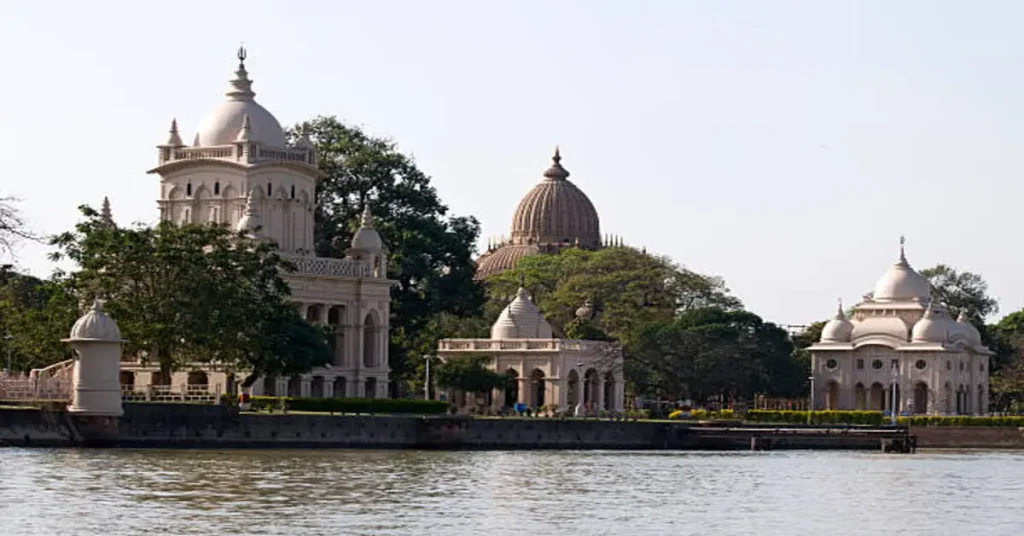
Just across the river from Dakshineswar is Belur Math. It is the global headquarters of the Ramakrishna Math and Ramakrishna Mission.
The Vision of Swami Vivekananda
Swami Vivekananda, the famous spiritual leader and chief disciple of Sri Ramakrishna, founded this place in 1897. He wanted to create a place that welcomed people of all backgrounds and beliefs.
The architecture of the main temple perfectly shows this idea of universal harmony. If you look at the building from different angles, it looks like a Hindu temple, an Islamic mosque, and a Christian church. Swami Vivekananda carefully chose these designs to show that all religions lead to the same truth.
What to Explore on the Campus
The campus is spread over 40 acres of clean, green, and quiet land by the river. It feels miles away from the noise of Kolkata. You can walk on the neatly cut lawns, visit the Swami Vivekananda Samadhi (his resting place), and see the room where he spent his final days.
There is also a wonderful museum on the grounds. It displays personal items, clothes, and letters belonging to Sri Ramakrishna, Holy Mother Sri Sarada Devi, and Swami Vivekananda.
Timings:
Morning: 6:30 AM to 11:30 AM.
Afternoon/Evening: 4:00 PM to 7:00 PM (Gates close at 6:30 PM. Times may change slightly in winter).
Entry Fee: Free.
Nearest Transit: Belur Math Railway Station. However, the best way to arrive is by taking the local ferry boat directly from the Dakshineswar temple ghat.
Traveler Tip: You must keep completely quiet inside the temple. You have to leave your shoes at the free shoe counter near the gate. Try to stay for the evening Sandhya Aarti (light offering) at 5:30 PM inside the main hall. It is a deeply peaceful and musical experience.
5. The Indian Museum (Jadu Ghar): India’s Heritage Repository
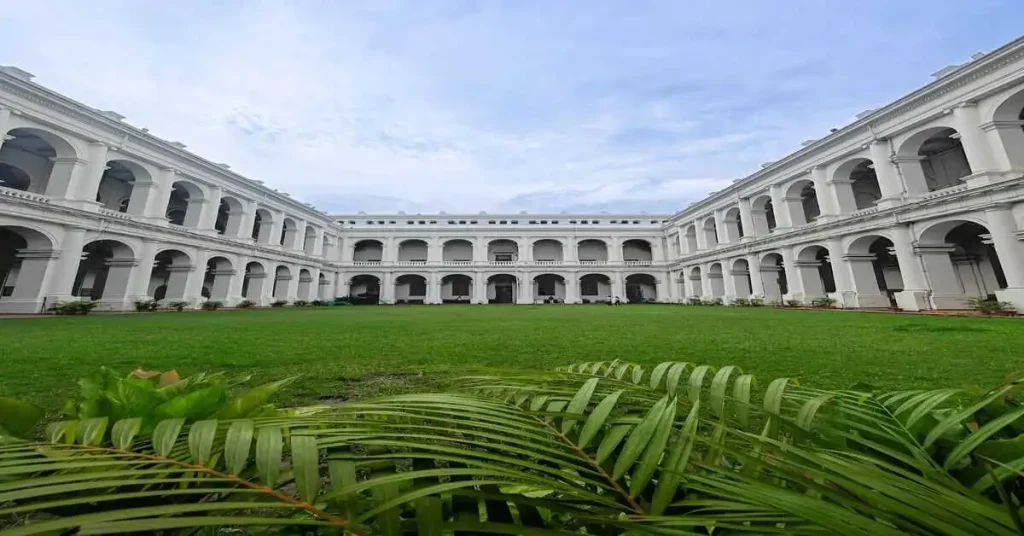
Situated on Jawaharlal Nehru Road in Kolkata’s lively Park Street area, the Indian Museum is home to an impressive collection of historical and cultural treasures.
The “House of Wonder”
Established in 1814 by the Asiatic Society of Bengal, the Indian Museum is among the world’s oldest museums, ranking ninth globally. It is also the largest institution of its type in India. Locals lovingly call it Jadu Ghar, which translates to the “House of Wonder” or “House of Magic,” because the items inside seemed so amazing to early visitors.
The building itself is huge and beautiful, built in an old Italian style with a massive open courtyard in the middle surrounded by tall pillars.
Amazing Exhibits Inside
The museum has 35 galleries divided into six main sections: Art, Archaeology, Anthropology, Geology, Zoology, and Economic Botany. Visitors can comfortably spend an entire day exploring everything this place has to offer.
Some of the main attractions worth exploring here are:
An actual 4,000-year-old Egyptian mummy.
The historic Lion Capital of Ashoka, which inspired India’s national emblem.
Ancient Buddhist sculptures from Gandhara.
A huge collection of real meteorites from space.
Giant fossilized skeletons of prehistoric animals.
Visiting Hours: Open from 10:00 AM to 6:00 PM, Tuesday through Sunday.(Closed on Mondays and Central Government holidays).
Entry Fees: ₹50 for Indian adults. School groups get a discount, and foreign tourists pay a separate fee. If you want to take photos with a camera, you have to pay a small extra charge.
Nearest Transit: Park Street Metro Station (Blue Line) is just a 2-minute walk away.
Traveler Tip: Wear comfortable walking shoes because you will be walking a lot. The museum is massive. If you are short on time, spend your two hours focusing purely on the Archaeology section and the ancient Bharhut gallery.
How to Cover Kolkata’s Top Sights in One Day
If you only have one full day (about 24 to 36 hours) in Kolkata, you can still see all five places. Just follow this easy, location-based plan:
1. Morning (7:30 AM – 11:30 AM): The North Heritage Circuit
Start your day early. Travel via the Blue Line Metro and get off at Dakshineswar station.
Visit the Dakshineswar Kali Temple early to beat the long lines and the hot sun.
After your visit, walk down to the temple’s ferry ghat (river bank).
Take the cheap and scenic public boat ride across the river to Belur Math.
Walk through the quiet campus of Belur Math and visit the main shrine.
2. Midday (12:00 PM – 2:30 PM): River Transit & Famous Food
Take a taxi, bus, or another ferry back down toward the centre of the city (Howrah or Babu Ghat). You will get a great view of Howrah Bridge from the water.
Head to the Park Street area for lunch.
Food tip: Try a traditional Bengali Thali (a large plate with rice, dal, fish or vegetable curries). If you want a quick snack, eat a famous Kolkata Kathi Roll from Kusum Rolls or Nizam’s.
3. Afternoon (2:30 PM – 4:30 PM): The Indian Museum
After lunch, take a short walk down Jawaharlal Nehru Road.
Spend two hours exploring the Indian Museum. Make sure to see the Egyptian mummy and the ancient sculptures.
4. Evening (4:45 PM – 7:00 PM): Victoria Memorial at Sunset
Take a quick 5-minute yellow taxi or a short metro ride to the Victoria Memorial.
Walk through the museum galleries if they are open.
As the sun goes down, sit on the lawns by the water pools and watch the white marble building light up against the night sky.
Practical Travel Tips for Kolkata
Getting Around: Kolkata is famous for its classic yellow Ambassador taxis. They run on meters, but you can also easily book app-based cabs like Ola and Uber. For short distances, shared auto-rickshaws are very cheap. However, the Kolkata Metro is always your fastest option during rush hours (9:00 AM to 11:30 AM, and 5:30 PM to 8:00 PM).
Best Time to Visit: The best weather in Kolkata is during the winter, between October and February. The days are sunny and pleasant, with temperatures between 18°C and 27°C. The summer (April to June) is extremely hot and sweaty. The monsoon season (July to September) brings heavy rains that can flood the streets.
Cultural Courtesy: When you visit temples like Dakshineswar and Belur Math, dress nicely. Cover your shoulders and knees to show respect. Always check the signs before taking photos inside any historical building or temple.
Language: Most people speak Bengali, Hindi, and English. You will easily be able to ask for directions or order food in simple Hindi or English.
Frequently Asked Questions (FAQ)
What are the top 5 tourist places in Kolkata for first-time visitors? The top five must-see places are the Victoria Memorial Hall, Howrah Bridge, Dakshineswar Kali Temple, Belur Math, and the Indian Museum. Together, they give you a perfect mix of Kolkata’s history, religion, and culture.
Can I cover the best places to visit in Kolkata in one day? Yes. You can visit all five places in one day if you start early. Start your day by exploring Dakshineswar Temple and Belur Math, travelling between them by ferry. In the afternoon, head to the Indian Museum followed by the Victoria Memorial. End your day viewing the Howrah Bridge.
Is Victoria Memorial open every day of the week? The outdoor gardens of Victoria Memorial are open every day. However, the indoor museum galleries are closed on Mondays and on national holidays.
How do I travel between Dakshineswar and Belur Math? The fastest and most beautiful way is to take the public river ferry. It runs directly between the Dakshineswar Ghat and the Belur Math Ghat across the Hooghly River. A ticket costs about ₹10 to ₹12, and the ride takes 15 minutes. This helps you avoid the heavy traffic on Bally Bridge.
Is photography permitted on Howrah Bridge? No. You are not allowed to take photos or videos on Howrah Bridge. The police ban it for public safety and security. If you want good photos of the bridge, take them from the Mallick Ghat Flower Market below it, or from a boat on the river.
Check also: Top 5 Tourist Places in Jharkhand: Best Destinations for Family & Nature Lovers